

Malvina Cueria: The First Paid Dental Assistant in United States History and the Quiet Pioneer Who Transformed Modern Dentistry
Malvina Cueria: The First Paid Dental Assistant in United States History and the Quiet Pioneer Who Transformed Modern Dentistry
The story of modern dental care often highlights scientific breakthroughs, influential researchers, and advancements in technology. Yet one of the most important figures in the evolution of the dental profession is someone who never sought the spotlight. Her name was Malvina Cueria, and she holds the distinction of being the first paid dental assistant in the United States. Her work in the late nineteenth century helped reshape how dental practices operated, opened doors for women in healthcare, and set the foundation for a profession that now supports hundreds of thousands of dental workers nationwide.
Malvina’s career began in the New Orleans practice of Dr. Edmund Kells, a dentist known for innovation and for introducing new ideas into clinical care. Before Cueria joined his staff, dentistry was usually a one-person operation. Dentists cleaned their own instruments, prepared their own rooms, and often struggled to manage increasing patient demand. That changed when Dr. Kells hired Malvina as a full-time employee, making her the first documented paid dental assistant in the country.
Her presence transformed the office dynamic. At a time when social norms discouraged women from seeking dental care without their husbands’ approval, Malvina’s participation made the practice more welcoming for female patients. Many women felt safer and more comfortable receiving treatment when another woman was present. As more women visited Dr. Kells’ office, other dentists across the country began to recognize the value of having assistants and started advertising “Ladies in Attendance” to attract female patients.
Malvina’s work extended far beyond greeting patients. She organized treatment rooms, prepared instruments, supported procedures chairside, and helped streamline workflows so the practice could treat more people in less time. Many of her responsibilities—now standard for dental assistants—were entirely new concepts in the 1880s. Without formal training programs or established guidelines, she helped build the framework for what the profession would eventually become.
Her contributions helped influence a growing national movement. Within decades, dental assistants formed local societies, and by 1925 the American Dental Assistants Association (ADAA) had been established. While Malvina did not play a formal role in organizing these groups, her early work helped spark the idea that dental assistants were essential members of the healthcare team.
Today, dental assistants are a fundamental part of dentistry. They take X rays, sterilize instruments, manage treatment spaces, assist during procedures, maintain patient records, and often serve as the patient’s most trusted point of contact. The profession operates across private practices, clinics, public health departments, the military, hospitals, and specialty centers.
Behind this national workforce stands Malvina Cueria, a teenager whose job in the 1880s helped launch a profession that would grow into one of the most important support roles in American healthcare. Her story remains a reminder that transformative change in medicine often begins not with sweeping reforms, but with one person stepping into a new role with dedication and purpose.
History of the Dental Assistant: How a Support Role Became a Central Profession in Modern Dentistry
The history of the dental assistant is a story of innovation, expanding access to care, and the gradual professionalization of a role that today serves as the backbone of dental practices across the United States. What began as an informal support position in the late nineteenth century has grown into a nationally recognized healthcare profession with defined standards, certification pathways, and an essential place in patient care.
Beginnings in the Late 1800s
The origins of dental assisting trace back to 1885 in New Orleans, where dentist Dr. Edmund Kells invited his wife to join him chairside. At the time, dentists worked alone, managing every task from preparing instruments to comforting patients. Bringing a second person into the operatory was a new idea, and it changed how dental practices functioned.
Soon after, Dr. Kells hired a teenager named Malvina Cueria as the first paid dental assistant in the United States. Cueria’s presence transformed the patient experience, especially for women. Social customs in the late nineteenth century often discouraged women from seeing a dentist without their husband’s approval. The addition of women to Dr. Kells’ staff made the office more welcoming, and female patients began seeking care in greater numbers. Dentists across the country took notice and began advertising “Ladies in Attendance” to attract new patients.
Professional Growth in the Early 1900s
As the idea of dental assisting spread, assistants took on more responsibilities. They helped prepare treatment rooms, sterilize instruments, support procedures, and improve workflow efficiency. By the 1910s, dental assistants had become a recognizable part of many practices.
The first major organizational milestone came in 1917 when a dental assistant society formed in Nebraska. Inspiration traveled quickly. In 1921, Juliette A. Southard, a dental assistant in New York, formed a similar group after learning about the Nebraska society. Southard’s leadership culminated in the first national dental assistant convention in Dallas in 1924. This gathering laid the groundwork for the creation of the American Dental Assistants Association (ADAA) in 1925, with Southard serving as its first president.
Standardization and Professional Recognition
With the ADAA established, the profession began developing training standards, ethical guidelines, and career pathways. Assistants increasingly gained responsibilities that contributed to smoother clinical operations. Many states began recognizing the importance of dental assistants through registration or certification requirements, helping formalize the profession.
The mid-twentieth century brought technological advancements, including the widespread use of dental X rays and new restorative materials. Dental assistants quickly expanded their skill sets to support these innovations. By the 1970s and 1980s, dental assisting programs were growing throughout the country, offering structured education and hands-on clinical training.
Modern Dental Assistants
Today’s dental assistants play a vital role in patient care and office operations. Their work includes taking X rays, sterilizing instruments, managing digital records, preparing patients, assisting chairside during procedures, and maintaining infection control standards. Many assistants also handle administrative tasks, patient education, supply management, and practice coordination.
The profession now spans multiple settings, including private offices, group practices, hospitals, public health clinics, military dental units, and specialty practices such as orthodontics and oral surgery. Certification options, such as the Certified Dental Assistant credential offered through the Dental Assisting National Board (DANB), provide pathways for professional advancement.
A Legacy Rooted in Innovation
The evolution of the dental assistant reflects more than a century of progress in healthcare. What began with Dr. Kells, his wife, and a pioneering assistant named Malvina Cueria has grown into a respected and widely practiced profession. Dental assistants today support millions of patient visits each year and play a critical part in delivering safe, efficient, and compassionate oral healthcare.
The history of dental assisting demonstrates how a simple idea—one dentist recognizing the value of support—sparked lasting change in the dental field and shaped one of the most important roles in modern dentistry.
If you're searching for more than just a job, moreover, a career with stability, respect, and long-term potential; then becoming a licensed dental assistant could be your perfect path forward. Furthermore, it's not just a fast-track into the workforce; it's a gateway to a profession that’s always in demand, deeply trusted, and personally rewarding. When you're ready to take that next step, one school rises above the rest: The New York School for Medical and Dental Assistants. Furthermore, with a reputation for hands-on training, dedicated instructors, and real-world readiness, it’s the smart choice for turning ambition into achievement. Lastly, The New York School for Medical and Dental Assistants stands out as the premier institution in the state. It’s the smart choice for anyone ready to invest in a futurein healthcare.
Contact NYSMDA today and get your career started!
2026 Best Dental Schools in America Ranked by Prestige, Research, Clinical Training, and Career Outcomes
2026 Best Dental Schools in America Ranked by Prestige, Research, Clinical Training, and Career Outcomes
Choosing the right dental school can shape the rest of your career. The best dental schools in America offer elite clinical training, strong residency placement, cutting-edge research, and access to major hospital systems. They also build enormous alumni networks that can open doors in private practice, oral surgery, orthodontics, academia, and corporate dentistry.
In 2026, the competition for admission remains fierce. Many elite dental schools now report average GPAs above 3.7 and DAT scores above 22. At the same time, student debt continues to rise, making return on investment more important than ever.
According to multiple 2026 rankings and admissions analyses, several schools consistently dominate the top tier of American dental education.
The Top Dental Schools in America for 2026
University of Michigan School of Dentistry
The University of Michigan continues to dominate global and American dental rankings in 2026. QS rankings again placed Michigan at or near the top of the United States.
Michigan stands out because it combines elite research with tremendous clinical volume. Students begin patient interaction early. The school also benefits from massive NIH research funding and one of the strongest specialty placement records in the nation.
Strengths include:
Extremely strong oral surgery placement
Excellent prosthodontics and periodontics
Massive alumni network
Outstanding simulation labs
Strong public-school tuition value for residents
Michigan produces many future faculty members, researchers, and specialists.
Harvard School of Dental Medicine
Harvard School of Dental Medicine remains the most prestigious dental school brand in the country. Admission rates reportedly hover around 3 to 4 percent.
Harvard’s program integrates medical and dental education more deeply than nearly any competitor. Students train alongside Harvard medical students during portions of the curriculum. Research opportunities are extraordinary.
The school excels in:
Academic prestige
Research output
Connections to major hospitals
Oral medicine
Craniofacial research
The downside is cost. Harvard remains one of the most expensive dental schools in America.
University of Pennsylvania School of Dental Medicine
University of Pennsylvania School of Dental Medicine has become one of the most respected private dental schools in the world.
Penn offers:
Heavy clinical exposure
Strong dual-degree opportunities
Excellent implant dentistry
Advanced digital dentistry
Strong business and entrepreneurship exposure
Penn’s location also helps students access one of the largest healthcare ecosystems in the Northeast.
UCSF School of Dentistry
UCSF School of Dentistry remains one of the strongest research-focused dental schools in the world.
UCSF dominates in:
Dental public health
Oral biology research
Hospital integration
Community care
Specialty training
Students interested in academic dentistry often view UCSF as a dream destination.
Columbia University College of Dental Medicine
Columbia University College of Dental Medicine continues to rise in reputation and selectivity.
Columbia’s curriculum strongly integrates medicine and dentistry. Students spend extensive time studying alongside medical students.
Advantages include:
Manhattan hospital network
Strong residency placement
Excellent orthodontics reputation
Research intensity
Elite Ivy League brand
The school’s New York location also creates strong networking opportunities in private practice and finance-related healthcare industries.
UCLA School of Dentistry
UCLA School of Dentistry remains one of the premier West Coast dental schools.
The school shines in:
Cosmetic dentistry
Implant dentistry
Digital workflow training
Research innovation
Southern California professional connections
Students also benefit from access to one of the largest patient populations in the country.
University of Washington School of Dentistry
University of Washington School of Dentistry consistently ranks among the best public dental schools in America.
The school is especially respected for:
Rural dentistry
Clinical training
Public health
Specialty preparation
Research productivity
Many dentists on the West Coast consider Washington one of the most underrated elite dental schools.
NYU College of Dentistry
NYU College of Dentistry has the largest dental program in the United States.
NYU provides:
Huge patient exposure
Extensive clinical experience
Massive alumni network
Strong international reputation
Broad specialty opportunities
The program receives criticism for cost and class size. Still, graduates spread throughout nearly every corner of American dentistry.
University of North Carolina Adams School of Dentistry
UNC Adams School of Dentistry remains one of the best value dental schools in America.
UNC combines:
Affordable in-state tuition
Excellent clinical training
Strong research
Great quality of life
Excellent board performance
For many students, UNC offers one of the strongest returns on investment in the entire dental world.
University of the Pacific Arthur A. Dugoni School of Dentistry
University of the Pacific Arthur A. Dugoni School of Dentistry has built an outstanding reputation for producing clinically confident dentists quickly.
Its accelerated three-year DDS program attracts ambitious students who want to enter practice faster.
Pacific stands out for:
Strong clinical intensity
Excellent patient communication training
Shorter degree timeline
High graduate satisfaction
What Makes a Dental School Truly Great?
The best dental schools usually dominate in five major categories:
Clinical experience
Research funding
Specialty placement
Board exam performance
Professional networking power
Prestige matters most for highly competitive specialties such as oral surgery, orthodontics, and pediatric dentistry. However, for general dentistry, clinical confidence and debt management may matter even more.
A student graduating with lower debt from a strong public school may ultimately outperform someone graduating from an elite private school with massive loans.
The Future of Dental Education
Dental education continues changing rapidly in 2026.
Artificial intelligence, digital scanners, robotic surgery assistance, 3D printing, and advanced imaging now shape modern dental curricula. Schools investing heavily in digital dentistry may gain long-term advantages.
Meanwhile, corporate dentistry continues expanding across the United States. This shift increasingly rewards graduates with strong business skills and efficient clinical workflows.
As a result, modern dental schools now emphasize entrepreneurship, technology, and interdisciplinary healthcare more than ever before.
For students entering dentistry today, the profession still offers one of the strongest combinations of income stability, autonomy, lifestyle flexibility, and long-term career demand in healthcare.
Why NYSMDA May Be the Best Career Path in Queens for Students Without a Four Year College Degree
Why NYSMDA May Be the Best Career Path in Queens for Students Without a Four Year College Degree
For many young people in Queens, the traditional four year college route no longer feels like the guaranteed path to success it once appeared to be.
Tuition costs continue rising. Student debt burdens have exploded across America. Meanwhile, many college graduates still struggle to find stable careers after graduation.
At the same time, healthcare careers are growing rapidly.
That reality is causing more students to explore practical, career focused education programs that lead directly into the workforce without requiring four years of university study.
In Queens, one school increasingly stands out for students seeking that path:
NYSMDA, the New York School for Medical and Dental Assistants.
The school has built a strong reputation by helping students quickly enter healthcare careers through focused medical assistant and dental assistant training programs.
For many students in New York City, it may represent one of the smartest educational decisions available without pursuing a traditional college degree.
Healthcare Jobs Continue Growing Across New York
One of the biggest reasons NYSMDA stands out is simple.
Healthcare remains one of the strongest industries in America.
Doctors’ offices, dental clinics, urgent care centers, hospitals, orthodontic practices, pediatric clinics, and surgical centers all continue hiring support staff at high rates. As New York’s population ages and healthcare demand rises, the need for trained medical and dental assistants continues expanding.
Unlike many office jobs vulnerable to outsourcing or artificial intelligence disruption, healthcare careers still require direct human interaction.
Patients need:
Clinical support
Communication
Scheduling
Chairside assistance
Sterilization procedures
Vital sign monitoring
Compassionate care
These are skills that cannot easily be replaced by automation.
NYSMDA trains students directly for those growing healthcare opportunities.
A Faster Alternative to Four Years of College
Traditional university education often requires:
Four years of study
Massive tuition costs
Student loans
General education requirements
Delayed workforce entry
Many NYSMDA students instead pursue a faster route into healthcare.
The school’s programs allow students to focus directly on practical clinical training rather than spending years on unrelated coursework.
That can dramatically accelerate financial independence.
While some college students may still be sitting in lecture halls at age twenty three, NYSMDA graduates may already possess:
Real healthcare experience
Industry certifications
Professional references
Steady income
Career momentum
For many working class and middle class families in Queens, that difference matters enormously.
Queens Is One of the Best Places for Healthcare Careers
Queens itself creates a major advantage.
The borough contains one of the most diverse and densely populated communities in America. That means enormous demand for healthcare services.
Medical offices, dental practices, pediatric clinics, orthodontists, oral surgeons, and urgent care centers operate throughout:
Long Island City
Astoria
Jackson Heights
Flushing
Forest Hills
Jamaica
Elmhurst
Bayside
Healthcare workers remain essential across every neighborhood.
NYSMDA’s location also makes commuting practical for many students throughout Queens and other parts of New York City.
Students Do Not Need a Traditional Elite Background
Another major advantage of NYSMDA is accessibility.
Many elite universities increasingly feel financially and academically out of reach for ordinary families. Admissions competition continues intensifying while tuition keeps climbing.
NYSMDA offers a more direct and realistic pathway into stable professional work.
Students from many backgrounds can pursue careers in:
Dental assisting
Medical assisting
Clinical healthcare support
Front office administration
Patient care coordination
For motivated students, the school may provide a life changing opportunity without requiring enormous debt burdens.
Dental Assisting Offers Strong Long Term Potential
Dental assisting has quietly become one of the best careers available without a four year degree.
Dental assistants often work:
Daytime schedules
Professional healthcare environments
Stable practices
Long term patient settings
As cosmetic dentistry, orthodontics, implants, and pediatric dentistry continue growing, skilled dental assistants remain in strong demand.
Experienced assistants in New York City can sometimes earn surprisingly strong incomes relative to the training required.
For students interested in healthcare but hesitant about spending years in university, dental assisting can become an excellent long term career.
Medical Assisting Continues Expanding Rapidly
Medical assisting also remains one of the fastest growing healthcare professions in America.
Medical assistants work directly alongside physicians and nurses while helping clinics operate efficiently.
Responsibilities may include:
Taking vital signs
Preparing exam rooms
Managing patient records
Drawing blood
Scheduling appointments
Supporting physicians during procedures
As healthcare demand expands, medical assistants continue becoming increasingly valuable throughout New York City.
The profession also creates pathways into larger healthcare careers later on.
Some medical assistants eventually become:
Nurses
Healthcare administrators
Physician assistants
Clinical supervisors
Office managers
For many students, medical assisting becomes a foundation for long term career growth.
The Importance of Career Focused Education
One major shift happening across America involves attitudes toward education itself.
More students now prioritize:
Career outcomes
Speed into the workforce
Lower debt
Practical skills
Financial independence
Career focused institutions like NYSMDA align closely with those priorities.
Rather than emphasizing abstract academic theory alone, schools like NYSMDA focus heavily on practical workforce preparation.
That model increasingly appeals to students who want stable careers quickly.
Professional Environment Without Massive Debt
Healthcare careers also offer something psychologically important.
Many students want professional work environments, meaningful careers, and long term stability without spending hundreds of thousands of dollars on education.
Medical and dental assisting provide exactly that.
Graduates often work inside:
Medical offices
Dental clinics
Orthodontic practices
Pediatric healthcare settings
Surgical centers
The atmosphere feels professional, organized, and healthcare oriented rather than transactional or temporary.
That distinction matters greatly for long term career satisfaction.
Technology Is Expanding Healthcare Careers
Modern healthcare is also becoming increasingly technological.
Dental offices now use:
Digital scanners
AI diagnostics
3D imaging
Digital orthodontics
Medical offices increasingly rely on:
Electronic health records
Digital scheduling systems
AI supported workflows
Advanced diagnostic tools
Healthcare support staff comfortable with modern technology may become even more valuable over time.
NYSMDA students entering healthcare today are entering a rapidly evolving industry with long term growth potential.
Why NYSMDA May Be One of the Smartest Choices in Queens
Ultimately, NYSMDA represents something increasingly important in modern America:
a practical pathway toward stable professional work without the financial risks of traditional four year university education.
For students in Queens seeking:
Faster career entry
Lower educational costs
Healthcare opportunities
Professional work environments
Long term job stability
NYSMDA may offer one of the most realistic and financially intelligent options available.
In 2026, as student debt concerns continue rising and healthcare demand continues expanding, career focused schools like NYSMDA may become more valuable than ever.
10 Best Careers Without a Four Year Degree in 2026: High Paying Jobs With Strong Future Growth
10 Best Careers Without a Four Year Degree in 2026: High Paying Jobs With Strong Future Growth
For decades, Americans were told that success required a traditional four year college degree.
But in 2026, that belief is rapidly changing.
Rising tuition costs, massive student loan debt, artificial intelligence disruption, and changing workforce demands have caused millions of people to rethink the value of expensive university education. At the same time, many careers requiring shorter training programs now offer strong salaries, job security, professional respect, and better work life balance than some traditional white collar jobs.
In many industries, skills increasingly matter more than diplomas.
Today, some of the smartest career paths involve technical certifications, healthcare training, apprenticeships, trade schools, or two year programs rather than four years spent accumulating debt.
These are the 10 best careers without a four year degree in 2026.
Dental Assistant
Dental assisting has become one of the fastest growing healthcare careers in America.
Dental assistants help dentists during procedures, manage sterilization, take X rays, prepare treatment rooms, and support patient care. Many programs can be completed in under one year.
The profession offers:
Strong job stability
Daytime schedules
Healthcare experience
Relatively low educational costs
Opportunities for advancement
In major metropolitan areas, experienced dental assistants can earn surprisingly strong incomes relative to the training required.
As cosmetic dentistry and orthodontics continue growing, demand for skilled dental assistants remains strong.
Medical Assistant
Medical assistants work directly alongside physicians in clinics, urgent care centers, hospitals, and specialty practices.
Responsibilities often include:
Taking vital signs
Scheduling patients
Managing records
Drawing blood
Assisting physicians
Handling patient communication
Healthcare demand continues expanding nationwide due to aging populations and rising medical needs.
Unlike many office jobs vulnerable to automation, medical assisting requires direct human interaction and clinical support skills.
Many programs can be completed within one to two years.
Air Traffic Controller
Air traffic control remains one of the highest paying careers available without a traditional bachelor’s degree.
Controllers manage aircraft movement and maintain aviation safety at airports and within national airspace systems.
The profession offers:
Excellent salaries
Federal benefits
Strong retirement packages
High job security
However, the work is extremely stressful and highly selective. Training and testing requirements remain rigorous.
Still, for individuals able to handle pressure, the financial upside can be enormous.
Commercial Pilot
Not all pilots require four year degrees.
Many commercial pilots begin through flight schools, aviation academies, or military training rather than traditional universities.
Regional airlines, cargo operations, charter services, agricultural aviation, and corporate aviation all continue facing pilot shortages.
Modern aviation careers can offer:
High income potential
Travel opportunities
Career mobility
Strong demand
As older pilots retire, aviation remains one of the strongest long term career sectors.
Electrician
Electricians continue becoming increasingly valuable in the modern economy.
As homes, vehicles, factories, and infrastructure become more technologically advanced, electrical expertise grows more important every year.
Electricians often enter the field through apprenticeships rather than traditional college pathways.
The career offers:
Strong wages
Entrepreneurship opportunities
Union protections
High demand
AI resistance
Because electrical work requires physical installation and problem solving, the profession remains difficult to automate fully.
HVAC Technician
Heating, ventilation, and air conditioning technicians are in enormous demand.
Every office building, apartment complex, hospital, school, and home depends on climate control systems. As temperatures rise globally and infrastructure ages, HVAC demand continues expanding rapidly.
HVAC careers offer:
Strong job stability
Good income potential
Relatively short training
Opportunities for business ownership
Skilled HVAC technicians can often earn far more than many office workers holding expensive degrees.
Cybersecurity Analyst
While some cybersecurity professionals hold university degrees, many enter the field through certifications, boot camps, or technical training programs.
Cybersecurity has become one of the fastest growing industries in the world because cyberattacks continue increasing across governments, corporations, and infrastructure systems.
Entry pathways often involve certifications such as:
CompTIA Security+
Certified Ethical Hacker
CISSP
Network security training
The field offers:
Remote work opportunities
High salaries
Massive industry demand
Fast advancement potential
For technically inclined individuals, cybersecurity may become one of the best long term careers without traditional college pathways.
Real Estate Agent
Real estate remains one of the few industries where highly motivated individuals can build substantial wealth without a university degree.
Successful agents often combine:
Sales ability
Networking
Marketing
Negotiation skills
Local market knowledge
Top producers can generate extremely high incomes, especially in luxury markets.
The profession also offers significant independence and entrepreneurial flexibility.
However, income can fluctuate heavily based on market conditions and personal performance.
Dental Hygienist
Dental hygiene consistently ranks among the best healthcare careers without a four year degree.
Most hygienists complete associate degree programs and licensing requirements rather than traditional bachelor’s pathways.
The profession offers:
Strong salaries
Flexible schedules
Healthcare stability
Predictable daytime hours
Dental hygienists often enjoy one of the strongest income-to-education ratios in healthcare.
Demand remains strong nationwide as preventative dental care becomes increasingly important.
Software Developer
Modern technology has weakened the traditional degree barrier in software development.
Many successful programmers now emerge from:
Coding boot camps
Self directed learning
Online certifications
Portfolio based hiring
Companies increasingly prioritize demonstrable coding ability over formal credentials.
Developers skilled in:
Artificial intelligence
Cybersecurity
Cloud computing
App development
Automation
Data engineering
can earn exceptional salaries without traditional degrees.
The technology sector increasingly rewards skill and productivity more than educational pedigree alone.
Why Four Year Degrees Are Losing Their Monopoly
Several major trends are reshaping the workforce:
Rising tuition costs
Student debt concerns
AI disruption
Remote learning
Certification based hiring
Labor shortages in skilled trades
Healthcare worker demand
Many employers increasingly care more about practical ability than academic credentials.
At the same time, younger workers increasingly prioritize:
Financial independence
Faster workforce entry
Lower debt
Flexibility
Entrepreneurship
That shift has elevated alternative career pathways dramatically.
The Best Career Depends on the Individual
There is no universally perfect career.
Some people thrive in healthcare. Others prefer technology, aviation, entrepreneurship, or skilled trades.
The smartest career path depends on:
Personality
Stress tolerance
Income goals
Work life balance priorities
Technical interests
Communication skills
What matters most is finding a field with long term demand, practical skill development, and growth potential.
The Future of Work Is Changing Rapidly
Artificial intelligence and automation will likely reshape millions of traditional white collar jobs over the next decade.
Ironically, many careers requiring physical skill, human interaction, technical expertise, or hands on problem solving may become more valuable rather than less valuable.
Healthcare support roles, skilled trades, aviation, cybersecurity, and advanced technical services all appear positioned for strong long term demand.
In 2026, success increasingly belongs not necessarily to people with the most expensive degrees, but to people with the most valuable skills.
And for many Americans, that may be very good news.
What Is Digital Dentistry? How AI, 3D Printing, and Advanced Technology Are Transforming Modern Dental Care
What Is Digital Dentistry? How AI, 3D Printing, and Advanced Technology Are Transforming Modern Dental Care
Dentistry is undergoing one of the biggest technological revolutions in healthcare.
For decades, many people associated dental offices with uncomfortable impression molds, slow crown manufacturing, paper charts, and highly manual procedures. In 2026, however, modern dentistry increasingly looks more like a fusion of medicine, engineering, artificial intelligence, and advanced computer science.
This transformation is known as digital dentistry.
Digital dentistry refers to the use of digital technologies, software, imaging systems, artificial intelligence, and computer driven manufacturing to improve dental diagnosis, treatment planning, efficiency, and patient outcomes.
The field is rapidly reshaping how dentists work and how patients experience dental care.
From 3D printed crowns to AI assisted diagnostics, digital dentistry is changing nearly every aspect of the profession.
What Exactly Is Digital Dentistry?
Digital dentistry involves replacing traditional mechanical or analog workflows with computerized systems and digital technology.
This includes:
Digital imaging
3D scanning
Computer aided design
Computer aided manufacturing
Artificial intelligence
3D printing
Digital orthodontics
Virtual treatment planning
Robotic assisted implant placement
The goal is to improve precision, efficiency, comfort, speed, and long term treatment outcomes.
Many procedures that once required multiple appointments can now sometimes be completed in a single visit.
Digital dentistry has fundamentally modernized the patient experience.
Intraoral Scanners Are Replacing Traditional Molds
One of the most visible examples of digital dentistry is the rise of intraoral scanners.
Traditionally, dentists used trays filled with impression material to create physical molds of patients’ teeth. Many patients found these impressions uncomfortable or gag inducing.
Modern intraoral scanners now create highly detailed 3D digital models using optical imaging technology.
Dentists can instantly scan:
Teeth
Bite relationships
Gum contours
Implant sites
Orthodontic alignment
The digital files can then be transmitted directly to laboratories or in office milling systems.
This technology has dramatically improved both patient comfort and restorative precision.
CAD CAM Dentistry Is Revolutionizing Crowns
Computer aided design and computer aided manufacturing, commonly known as CAD CAM dentistry, has transformed restorative treatment.
Using specialized software, dentists can digitally design crowns, veneers, bridges, and implant restorations with extraordinary precision.
Some systems then mill restorations directly inside the dental office.
This means patients may receive:
Same day crowns
Faster restorations
Better fitting prosthetics
Reduced temporary restorations
More predictable esthetic outcomes
What once required weeks can now sometimes happen within hours.
3D Printing Is Expanding Rapidly
3D printing may become one of the most important technologies in the future of dentistry.
Dental offices and laboratories increasingly use 3D printers to create:
Surgical guides
Clear aligners
Retainers
Dentures
Temporary crowns
Orthodontic models
Implant planning tools
The technology allows highly customized treatment at increasingly lower cost.
As printing materials improve, experts believe 3D printing will continue reshaping restorative and orthodontic care throughout the next decade.
Artificial Intelligence Is Entering Dentistry
Artificial intelligence has begun entering dental practice rapidly.
AI systems can now help analyze:
X rays
Bone loss
Tooth decay
Root fractures
Orthodontic movement
Periodontal disease
Implant positioning
Some software systems already assist dentists by highlighting suspicious findings on radiographs that might otherwise be missed.
AI may eventually improve diagnostic consistency while helping dentists manage large amounts of clinical data more efficiently.
Importantly, most experts believe AI will augment dentists rather than replace them. Human judgment, communication, dexterity, and treatment planning remain essential in dentistry.
Digital Orthodontics Is Transforming Smiles
Orthodontics may be one of the biggest beneficiaries of digital dentistry.
Modern orthodontic treatment increasingly relies on:
Digital scans
AI treatment simulation
3D printed aligners
Virtual tooth movement models
Remote monitoring systems
Clear aligner therapy has exploded globally partly because digital workflows make highly customized orthodontic planning possible.
Patients can often preview simulated treatment outcomes before therapy even begins.
This level of precision barely existed twenty years ago.
Cone Beam CT Imaging Has Changed Diagnostics
Cone beam computed tomography, often called CBCT imaging, provides three dimensional imaging of teeth, jaw structures, airways, nerves, and bone anatomy.
Traditional dental X rays provide only two dimensional views. CBCT technology gives dentists far more detailed anatomical information.
This is especially important for:
Dental implants
Oral surgery
Orthodontics
Airway analysis
Endodontics
TMJ evaluation
The technology has dramatically improved surgical planning and diagnostic accuracy.
How Digital Dentistry Benefits Patients
Digital dentistry offers several major advantages for patients:
Faster treatment
Greater precision
Better comfort
Improved esthetics
Reduced appointment times
Enhanced treatment planning
More predictable outcomes
Patients increasingly expect technology integrated healthcare experiences. Digital dentistry aligns closely with those expectations.
For anxious patients, the reduction in uncomfortable impression materials and long appointment times can significantly improve the dental experience.
Why Digital Dentistry Matters Financially
Digital dentistry is also reshaping the business side of dental practice.
Practices investing in advanced digital workflows often improve:
Efficiency
Patient throughput
Case acceptance
Treatment predictability
Marketing appeal
High technology offices can also differentiate themselves competitively in crowded metropolitan markets.
However, the transition can be expensive. Advanced scanners, milling units, imaging systems, and AI software often require major capital investment.
As a result, dentistry increasingly resembles other high technology industries where innovation drives competitive advantage.
Dental Schools Are Rapidly Adapting
Modern dental schools now train students in technologies that barely existed a generation ago.
Top institutions such as Harvard School of Dental Medicine, UCLA School of Dentistry, and University of Pennsylvania School of Dental Medicine increasingly integrate:
Digital scanning
CAD CAM systems
Virtual simulation
AI diagnostics
Digital orthodontics
Implant planning software
The modern dentist must increasingly function as both healthcare provider and technology operator.
The Future of Dentistry Is Increasingly Digital
Experts believe dentistry may become one of the most technologically advanced areas of healthcare over the next twenty years.
Future developments may include:
AI guided diagnostics
Robotic implant placement
Fully automated aligner manufacturing
Bioprinted dental tissues
Predictive oral health analytics
Remote dental monitoring
While traditional clinical skills will always remain essential, digital workflows are becoming impossible to ignore.
The profession is evolving rapidly.
Why Digital Dentistry Is So Important in 2026
Ultimately, digital dentistry represents more than just new gadgets.
It reflects a broader transformation in healthcare toward precision, efficiency, personalization, and data driven treatment.
Dentists today are not simply filling cavities.
They are increasingly using advanced imaging systems, artificial intelligence, 3D manufacturing, and digital simulation tools to redesign smiles and improve long term oral health with extraordinary precision.
In many ways, dentistry may now be one of the most technologically innovative professions in modern medicine.
Why Dentistry May Be the Best Healthcare Career in 2026: High Income, Flexibility, and the Rise of Digital Dentistry
Why Dentistry May Be the Best Healthcare Career in 2026: High Income, Flexibility, and the Rise of Digital Dentistry
For decades, dentistry has quietly remained one of the most attractive professions in America.
While headlines often focus on physicians, surgeons, and Silicon Valley entrepreneurs, dentistry has consistently offered something increasingly rare in modern professional life:
Financial stability
Professional independence
Strong work life balance
High income potential
Entrepreneurial freedom
Advanced technology integration
Long term career security
In 2026, dentistry may be more appealing than ever.
As artificial intelligence, digital imaging, 3D printing, robotics, and cosmetic procedures transform healthcare, dentistry sits directly at the intersection of medicine, engineering, aesthetics, and technology.
At the same time, rising physician burnout, hospital bureaucracy, and healthcare system pressures have caused many students to reconsider traditional medical careers.
For ambitious students seeking a respected healthcare profession with greater lifestyle flexibility and ownership opportunities, dentistry increasingly stands apart.
Why Dentistry Remains So Attractive
Dentists occupy a unique role within healthcare.
Unlike many physicians employed by large hospital systems, dentists often maintain substantial professional autonomy. Many own their own practices, control scheduling decisions, build long term patient relationships, and operate as both healthcare providers and business owners.
That combination is powerful.
Dentistry allows professionals to blend science, medicine, art, communication, and entrepreneurship into a single career.
Patients also directly experience the impact of dental work. A restored smile can dramatically improve confidence, appearance, speech, nutrition, and overall quality of life.
For many dentists, that visible transformation creates a highly rewarding professional experience.
The Financial Strength of Dentistry
One major reason dentistry remains highly competitive is financial.
Successful dentists often earn substantial incomes while maintaining more predictable schedules than many medical specialists. Practice owners can build long term wealth through both clinical income and business equity.
Specialties such as:
Orthodontics
Oral surgery
Endodontics
Prosthodontics
Pediatric dentistry
Periodontics
can become especially lucrative depending on geography and practice model.
Unlike some healthcare sectors heavily dependent on insurance reimbursement, dentistry also benefits from a significant elective and cosmetic component. Procedures involving esthetics, implants, veneers, whitening, and aligners continue expanding rapidly.
That diversification strengthens financial stability.
The Rise of Cosmetic Dentistry
Modern dentistry extends far beyond fillings and cleanings.
Social media, video conferencing, and image conscious culture have dramatically increased interest in cosmetic dental procedures. Patients increasingly view smiles as part of personal branding, professional appearance, and confidence.
As a result, cosmetic dentistry has exploded in popularity.
Dentists now routinely perform:
Veneers
Teeth whitening
Smile makeovers
Clear aligners
Digital smile design
Full mouth reconstruction
Implant supported restorations
This aesthetic dimension makes dentistry partly medical and partly artistic.
For creative professionals who enjoy precision and visual transformation, the field can feel uniquely satisfying.
Digital Dentistry Is Changing Everything
Few healthcare industries are evolving technologically as rapidly as dentistry.
Modern dental offices increasingly rely on:
3D intraoral scanners
Cone beam CT imaging
CAD CAM restorations
Artificial intelligence diagnostics
3D printing
Laser dentistry
Digital orthodontics
Robotic implant planning
Traditional impression molds are disappearing in many practices. Crowns can sometimes be designed and milled the same day. AI systems increasingly assist with radiographic analysis and treatment planning.
Dentistry has become deeply integrated with advanced engineering and digital workflows.
That technological transformation has also made the profession increasingly appealing to scientifically minded students interested in innovation.
Better Lifestyle Than Many Medical Careers
Lifestyle has become one of dentistry’s strongest advantages.
Many physicians face:
Overnight hospital shifts
Emergency call schedules
Administrative overload
Insurance battles
Burnout
Loss of autonomy
Dentists often maintain significantly greater schedule control.
While dentistry can certainly be stressful and physically demanding, many dentists still enjoy:
Mostly daytime schedules
Limited emergencies
More predictable hours
Long term patient relationships
Independent practice ownership
For younger generations increasingly prioritizing work life balance, that distinction matters enormously.
Why Dental School Is So Competitive
The appeal of dentistry has intensified competition dramatically.
Top dental schools such as Harvard School of Dental Medicine, University of Pennsylvania School of Dental Medicine, Columbia University College of Dental Medicine, and UCLA School of Dentistry receive enormous application volumes each year.
Strong applicants typically possess:
High GPA performance
Strong DAT scores
Science research experience
Shadowing hours
Volunteer activities
Leadership experience
Strong recommendation letters
Admission rates at elite schools can rival some medical programs.
Students increasingly recognize that dentistry offers a rare combination of income, flexibility, and independence unavailable in many other professions.
The Growing Importance of Dental Specialties
Another trend reshaping dentistry is specialization.
Modern dentistry has become increasingly advanced and interdisciplinary. Specialists now manage highly sophisticated treatments involving:
Surgical reconstruction
Airway focused care
Digital orthodontics
Implantology
Facial esthetics
Sleep medicine integration
This has elevated dentistry scientifically and clinically far beyond older stereotypes about routine cleanings and fillings.
Many dental specialists now operate at the frontier of biomedical technology and facial reconstruction science.
The AI Revolution in Dentistry
Artificial intelligence may soon transform dentistry even further.
AI systems are already assisting dentists in:
Detecting cavities
Identifying bone loss
Predicting orthodontic movement
Planning implant placement
Automating administrative workflows
Some experts believe AI could eventually improve diagnostic accuracy and allow dentists to focus more heavily on treatment planning and patient communication.
Rather than replacing dentists, AI will likely increase the sophistication of dental practice.
Dentistry’s Long Term Future Looks Strong
Demand for dental care continues growing for several reasons:
Aging populations
Cosmetic demand
Implant dentistry growth
Greater awareness of oral health
Links between oral health and systemic disease
Expanding digital treatment options
At the same time, dentistry remains difficult to automate fully because procedures require human precision, patient trust, communication, and complex decision making.
That combination creates unusually strong long term career security.
Why Dentistry Continues Attracting Elite Students
Ultimately, dentistry occupies a rare professional category.
It combines:
Medicine
Technology
Entrepreneurship
Art and aesthetics
Financial opportunity
Patient relationships
Lifestyle flexibility
Very few careers offer all those advantages simultaneously.
In 2026, as younger professionals increasingly seek careers balancing income, autonomy, purpose, and quality of life, dentistry may quietly represent one of the smartest healthcare career choices in America.
And that reality explains why dental school admissions continue becoming more competitive every year.
Why Orthodontics May Be the Best Medical Specialty in 2026: High Income, Better Lifestyle, and the Future of Digital Dentistry
Why Orthodontics May Be the Best Medical Specialty in 2026: High Income, Better Lifestyle, and the Future of Digital Dentistry
For decades, orthodontics has quietly occupied a unique position inside healthcare.
It combines medicine, engineering, aesthetics, psychology, and entrepreneurship into one profession. Orthodontists improve facial structure, confidence, airway function, and long term oral health while often maintaining schedules far more manageable than many physicians or surgeons.
In 2026, the specialty may be more attractive than ever.
As artificial intelligence, 3D printing, clear aligners, and digital imaging transform modern dentistry, orthodontics increasingly sits at the center of one of healthcare’s biggest technological revolutions.
At the same time, the profession continues offering something many other medical fields struggle to provide simultaneously:
High income potential
Predictable schedules
Long term patient relationships
Practice ownership opportunities
Strong work life balance
Advanced technology integration
For many healthcare students, orthodontics now represents one of the most desirable professional paths in America.
What Exactly Does an Orthodontist Do?
Orthodontists specialize in diagnosing and correcting irregularities involving teeth, jaw alignment, facial growth, and bite function.
While many people associate orthodontics simply with braces, the specialty has evolved dramatically over the past twenty years.
Modern orthodontists now manage:
Clear aligner therapy
Jaw growth modification
Airway focused treatment
Surgical orthodontics
Facial asymmetry
Craniofacial abnormalities
Digital smile design
Temporomandibular joint concerns
Advanced biomechanical tooth movement
The field increasingly blends medicine, engineering, anatomy, and computer science.
Why Orthodontics Is So Competitive
Orthodontics remains one of the hardest specialties to enter in dentistry because the rewards are substantial.
Many orthodontists enjoy:
Strong six figure or even seven figure incomes
Ownership of private practices
Mostly daytime schedules
Limited emergency calls
Physically cleaner work environments
Strong patient loyalty
High professional autonomy
Compared to many physicians facing hospital bureaucracy, overnight shifts, or burnout, orthodontists often maintain significantly more control over their professional lives.
That reality has made orthodontic residency positions extraordinarily competitive.
Many residency programs accept only two to six residents annually.
Students applying to elite orthodontic programs frequently possess:
Top dental school rankings
Extensive research experience
Leadership roles
Published scientific papers
Strong faculty recommendations
High board examination scores
At schools like Harvard School of Dental Medicine, University of Michigan School of Dentistry, and UNC Adams School of Dentistry, competition has reached extraordinary levels.
The Rise of Clear Aligners and Digital Orthodontics
One major reason orthodontics continues growing rapidly is technology.
Clear aligner systems transformed the specialty over the last two decades. What once seemed experimental has now become mainstream across adult and adolescent treatment.
Digital scanning has largely replaced traditional impression molds in many practices. Artificial intelligence increasingly assists with treatment simulations and tooth movement predictions.
Modern orthodontic offices now use:
3D intraoral scanners
Cone beam CT imaging
AI treatment planning
3D printing
Remote monitoring software
Digital workflow integration
Few healthcare specialties have undergone such rapid technological modernization.
This technological shift has also attracted a new generation of scientifically minded students interested in combining healthcare with innovation.
Orthodontics and Facial Aesthetics
Another major trend reshaping the field is facial aesthetics.
Patients increasingly view orthodontic treatment not merely as functional correction, but as part of broader facial enhancement and confidence improvement.
Orthodontists today often work closely with:
Oral surgeons
Cosmetic dentists
Plastic surgeons
ENT specialists
Sleep medicine physicians
The specialty has become deeply connected to airway health, facial balance, and long term craniofacial development.
This interdisciplinary evolution has elevated orthodontics far beyond traditional braces.
The Financial Appeal of Orthodontics
Financially, orthodontics remains extremely attractive.
While incomes vary widely depending on geography and practice ownership, successful orthodontists often earn among the highest incomes in dentistry.
Private practice ownership can dramatically increase earning potential. Many orthodontists also benefit from relatively predictable patient demand because orthodontic treatment remains partly cosmetic and partly functional.
Unlike some healthcare fields dependent entirely on insurance reimbursement, orthodontics often maintains stronger cash flow stability through elective treatment models.
For dental students graduating with significant educational debt, that financial reality matters enormously.
Work Life Balance Matters More Than Ever
In 2026, younger healthcare professionals increasingly prioritize lifestyle alongside income.
Burnout across medicine has become a major national concern. Long hospital shifts, administrative burden, and emotional exhaustion have pushed many students away from certain medical specialties.
Orthodontics often provides a very different lifestyle.
Many orthodontists work:
Primarily weekday schedules
Limited emergencies
Few overnight calls
Predictable appointment structures
Long term treatment relationships
This balance between professional success and personal life has become one of the specialty’s strongest selling points.
The Future of Orthodontics
The next decade may completely reshape orthodontics again.
Artificial intelligence may soon improve diagnostic precision dramatically. Remote monitoring could allow orthodontists to supervise patients digitally between visits. 3D printing may accelerate appliance customization even further.
Some experts believe future orthodontic treatment may become faster, more personalized, and more biologically precise than ever before.
Airway centered orthodontics may also expand as researchers increasingly study links between jaw development, breathing patterns, sleep quality, and long term health.
The specialty’s scientific frontier continues growing rapidly.
Why Orthodontics Continues Attracting Elite Students
Orthodontics remains rare among healthcare professions because it combines:
Medicine
Technology
Business ownership
Art and aesthetics
Long term patient relationships
High compensation
Better lifestyle flexibility
Very few careers offer all those elements simultaneously.
For ambitious students interested in healthcare but wary of physician burnout, orthodontics increasingly appears to offer one of the most balanced and rewarding professional lives available.
That is precisely why admission into orthodontic residency programs remains so brutally competitive.
And in 2026, demand for those limited training positions may be stronger than ever.
Hardest Orthodontic Residency Programs to Get Into in 2026
Hardest Orthodontic Residency Programs to Get Into in 2026: America’s Most Competitive Orthodontics Schools
Orthodontics has become one of the most competitive specialties in all of healthcare education. Every year, thousands of highly accomplished dental students compete for a very limited number of residency positions across the United States.
The numbers are brutal.
Many orthodontic residency programs accept only two to six residents annually. Some programs receive hundreds of applications for just a handful of seats. Even students graduating near the top of elite dental schools regularly face rejection.
In 2026, orthodontics remains one of the hardest professional training pathways in America.
But which programs are truly the most difficult to enter?
These orthodontic residencies consistently rank among the nation’s most selective due to prestige, research intensity, clinical reputation, faculty influence, and tiny acceptance rates.
Harvard Orthodontics
Harvard School of Dental Medicine remains one of the hardest orthodontic programs in the world to enter.
The combination of Ivy League prestige, elite faculty, world class hospital affiliations, and extremely small class sizes creates extraordinary competition. Applicants often possess near perfect academic credentials, extensive research publications, and leadership experience.
Harvard’s orthodontic department also attracts international applicants and future academics at unusually high rates.
University of Michigan Orthodontics
University of Michigan School of Dentistry consistently ranks among the most selective orthodontic programs nationally.
The department’s legendary reputation in biomechanics and craniofacial research attracts top dental graduates from across America. Michigan’s orthodontic faculty have produced generations of influential researchers and specialty leaders.
Applicants often require exceptional academic records simply to receive interview invitations.
University of North Carolina Orthodontics
UNC Adams School of Dentistry has become extraordinarily competitive because of its reputation for surgical orthodontics and clinical excellence.
The program’s graduates enjoy strong placement into elite private practices and academic positions. UNC’s relatively small residency size further intensifies selectivity.
Many accepted applicants possess both research credentials and significant clinical accomplishments.
University of Washington Orthodontics
University of Washington School of Dentistry may quietly be one of the most academically demanding orthodontic residencies in the country.
The program heavily emphasizes research, craniofacial biology, and advanced orthodontic science. Admission standards are notoriously high, particularly for out of state applicants.
The residency’s small size and strong research orientation create an exceptionally difficult admissions environment.
University of Pennsylvania Orthodontics
University of Pennsylvania School of Dental Medicine continues attracting some of the strongest applicants in dentistry.
Penn’s integration with a major Ivy League medical ecosystem creates major appeal for academically focused students. The program strongly values research, interdisciplinary care, and scholarly achievement.
Its reputation in esthetic and interdisciplinary orthodontics continues to grow nationally.
Columbia Orthodontics
Columbia University College of Dental Medicine remains one of the hardest orthodontic residencies to enter partly because of its unique medical integration.
Students train alongside one of the nation’s most advanced medical centers while managing highly complex craniofacial and orthognathic cases.
The New York City location also attracts elite applicants from around the world.
UCSF Orthodontics
UCSF School of Dentistry combines extreme academic rigor with highly advanced clinical training.
The residency’s emphasis on interdisciplinary treatment, digital dentistry, and craniofacial care has made it increasingly selective. UCSF’s broader biomedical research environment also attracts applicants interested in academic careers.
Acceptance rates remain exceptionally low.
UCLA Orthodontics
UCLA School of Dentistry has become increasingly difficult to enter because of its strong esthetic orthodontics reputation and Southern California prestige.
The residency attracts applicants seeking both elite clinical training and access to one of the country’s largest cosmetic dentistry markets.
Class sizes remain relatively small compared to application volume.
Why Orthodontics Is So Hard to Match Into
Orthodontics sits at the intersection of several highly attractive professional qualities:
High earning potential
Predictable lifestyle
Entrepreneurial practice ownership
Cosmetic and functional treatment impact
Long term patient relationships
Rapid technological innovation
As a result, the specialty attracts some of the strongest students in dentistry every year.
Accepted residents often possess:
Top 5 percent dental school rankings
Near perfect GPA performance
Published scientific research
Leadership positions
Teaching experience
Orthodontic externships
Strong faculty mentorship
Outstanding recommendation letters
Many applicants also complete additional research fellowships or master’s degrees to strengthen their applications.
The Rise of Research Driven Admissions
One major trend in 2026 is the growing importance of research experience.
Elite orthodontic programs increasingly prioritize applicants who demonstrate scientific curiosity and academic productivity. Published papers, poster presentations, and craniofacial research involvement now carry enormous weight at top institutions.
Some orthodontic departments increasingly resemble academic biomedical research centers as much as traditional clinical residencies.
That shift has intensified competition even further.
The Financial Stakes Are Massive
Another reason orthodontics remains fiercely competitive is financial.
Orthodontists continue to rank among the highest compensated dental specialists in America. Successful private practitioners can generate substantial incomes while maintaining relatively predictable schedules compared to many medical professions.
For many dental students graduating with large educational debt burdens, orthodontics offers both professional prestige and financial upside.
That economic reality continues driving application volume higher every year.
The Future of Orthodontic Training
Modern orthodontics now extends far beyond braces.
Residents train in:
Clear aligner systems
3D imaging
Artificial intelligence treatment planning
Airway analysis
Digital scanning
Orthognathic surgery coordination
Temporary anchorage devices
Advanced biomechanics
Craniofacial anomalies
The specialty increasingly blends engineering, computer science, medicine, facial esthetics, and data driven treatment planning.
As technology transforms dentistry, elite orthodontic residencies are becoming even more academically sophisticated and difficult to access.
For dental students in 2026, gaining admission into one of these programs represents entry into one of the most competitive and respected specialties in healthcare.
Best Orthodontic Residency Programs in America for 2026: The Top Orthodontics Schools Ranked
Best Orthodontic Residency Programs in America for 2026: The Top Orthodontics Schools Ranked
Orthodontics remains one of the most competitive and prestigious specialties in modern dentistry. Known for high earning potential, advanced technology, cosmetic impact, and intellectual complexity, orthodontics continues to attract many of the strongest dental school graduates in America.
But not all orthodontic residency programs carry the same reputation.
Some programs dominate because of elite faculty, cutting edge craniofacial research, difficult clinical cases, hospital affiliations, or powerful alumni networks. Others stand out for biomechanics, surgical orthodontics, digital dentistry, airway research, or interdisciplinary collaboration.
In 2026, these programs continue to represent the gold standard in orthodontic education.
Harvard School of Dental Medicine
Harvard School of Dental Medicine remains one of the most respected names in global dental education.
Its orthodontic residency benefits enormously from Harvard’s broader medical ecosystem, interdisciplinary research environment, and affiliation with world class hospitals in Boston. The program places heavy emphasis on evidence based orthodontics, craniofacial biology, and complex treatment planning.
Graduates frequently move into academic leadership, private practice ownership, or elite multidisciplinary practices.
University of Michigan Orthodontics
University of Michigan School of Dentistry has long been considered one of the premier orthodontic programs in the world.
Michigan’s department is famous for biomechanics, clinical rigor, and orthodontic research output. The school consistently produces influential faculty members and researchers in craniofacial development and tooth movement science.
The clinical training is extensive and often involves highly complex orthodontic cases.
University of North Carolina Chapel Hill
UNC Adams School of Dentistry possesses one of the strongest reputations in orthodontics anywhere in America.
UNC orthodontics has historically been known for excellence in surgical orthodontics, airway research, and craniofacial treatment. The department has produced numerous leaders in organized dentistry and orthodontic academia.
Many practicing orthodontists consider UNC one of the most clinically respected programs in the country.
University of Pennsylvania Orthodontics
University of Pennsylvania School of Dental Medicine combines Ivy League prestige with highly advanced orthodontic training.
Penn’s orthodontic department benefits from major biomedical research integration and advanced digital dentistry resources. The program emphasizes interdisciplinary treatment involving periodontics, prosthodontics, oral surgery, and facial esthetics.
Its graduates frequently enter elite private practices and academic careers.
Columbia University Orthodontics
Columbia University College of Dental Medicine remains deeply integrated with one of the nation’s strongest academic medical centers.
The orthodontic residency offers exceptional exposure to craniofacial anomalies, orthognathic surgery cases, and medically complex patients. Columbia’s location in New York City also creates exposure to highly diverse patient populations.
The school remains highly research oriented and academically intense.
University of Washington Orthodontics
University of Washington School of Dentistry is widely respected for both clinical and research excellence.
The department has historically excelled in craniofacial biology, growth and development, and advanced orthodontic mechanics. Seattle’s strong healthcare and technology ecosystem also supports innovation in digital orthodontics.
The residency remains one of the most difficult to enter nationally.
University of California San Francisco
UCSF School of Dentistry combines elite academics with strong clinical diversity.
The orthodontic program is known for interdisciplinary collaboration, craniofacial treatment, and advanced imaging technologies. UCSF’s broader medical campus significantly strengthens the residency’s exposure to medically complex patients.
The school also attracts students interested in research and academic leadership.
University of California Los Angeles
UCLA School of Dentistry continues to rank among the nation’s top orthodontic programs.
The residency is recognized for esthetic orthodontics, digital workflows, and exposure to diverse patient populations. UCLA’s location also creates close interaction with cosmetic dentistry and facial esthetics industries.
Its alumni network remains extremely influential in Southern California and beyond.
Case Western Reserve University Orthodontics
Case Western Reserve University School of Dental Medicine quietly maintains one of the strongest orthodontic reputations in America.
The program has historically emphasized biomechanics and rigorous scientific training. Many orthodontists consider Case one of the most intellectually demanding orthodontic residencies in the country.
Its graduates are highly respected clinically and academically.
Texas A&M Baylor Orthodontics
Texas A&M College of Dentistry operates one of the most respected orthodontic departments in the southern United States.
The Baylor orthodontic program is known for large clinical volume, surgical cases, and highly practical training. Texas’ enormous population growth has also increased orthodontic demand throughout the region.
The Future of Orthodontics in 2026
Orthodontics itself is changing rapidly.
Artificial intelligence, 3D printing, clear aligners, digital scanning, airway centered treatment, and robotic manufacturing are transforming the specialty. Modern residents now train in technologies that barely existed twenty years ago.
At the same time, competition continues to intensify.
Top orthodontic residencies often accept only a handful of students annually. Many incoming residents graduate near the top of their dental school classes and possess extensive research backgrounds.
Strong applicants often have:
Top 5 to 10 percent class rank
High National Board scores
Published research
Leadership positions
Orthodontic shadowing
Faculty recommendations
Strong manual dexterity
Excellent interview performance
Why Orthodontics Remains So Competitive
The specialty continues attracting elite applicants because it combines medicine, engineering, art, aesthetics, and business ownership.
Orthodontists often enjoy:
High income potential
Predictable work schedules
Long term patient relationships
Advanced technology integration
Entrepreneurial opportunities
Strong work life balance
Few healthcare careers combine those advantages simultaneously.
As a result, orthodontics remains one of the most selective specialties in all of dentistry.
For aspiring orthodontists in 2026, admission into one of these elite programs represents not only academic achievement, but entry into one of healthcare’s most respected professional communities.
What Is the Easiest Language to Learn in 2026? The Best Languages for English Speakers Ranked
What Is the Easiest Language to Learn in 2026? The Best Languages for English Speakers Ranked
Learning a new language once seemed like something reserved for diplomats, professors, or world travelers. Today, however, millions of people are trying to become bilingual for career growth, travel, relationships, business opportunities, and even cognitive health.
The biggest question most beginners ask is simple:
What is the easiest language to learn?
The answer depends heavily on your native language, motivation, and exposure. For native English speakers, though, some languages are dramatically easier than others because they share vocabulary, grammar patterns, sentence structure, and pronunciation similarities with English.
Certain languages can be learned conversationally within months, while others may require years of intensive study.
In 2026, these are widely considered the easiest languages for English speakers to learn.
Why Some Languages Are Easier Than Others
Languages become easier to learn when they share similarities with your native tongue.
English itself has roots in Germanic languages while also borrowing heavily from Latin and French vocabulary. That means English speakers often recognize thousands of familiar words in languages like Spanish, French, Italian, Dutch, and Portuguese.
Ease also depends on:
Alphabet familiarity
Grammar complexity
Pronunciation difficulty
Verb conjugation systems
Sentence structure
Exposure through media and culture
Languages using the Latin alphabet naturally feel easier for most English speakers than languages using entirely different writing systems like Mandarin Chinese, Japanese, Arabic, or Korean.
Spanish Often Ranks as the Easiest Language to Learn
For many Americans, Spanish is usually considered the easiest foreign language to learn.
There are several reasons for this.
Spanish pronunciation is highly consistent. Unlike English, words are generally pronounced exactly how they are written. The grammar, while more structured than English, follows predictable patterns. Vocabulary also overlaps heavily with English because both languages absorbed large amounts of Latin.
English speakers already know thousands of recognizable Spanish words:
Hospital
Animal
Natural
Central
Important
Color
Doctor
Spanish also offers massive practical value in the United States. More than forty million Americans speak Spanish at home, making it one of the most useful second languages for business, healthcare, education, hospitality, and everyday communication.
Another major advantage is exposure. Spanish surrounds Americans constantly through television, music, movies, social media, restaurants, sports, and travel.
That immersion dramatically speeds up learning.
Italian Is Extremely Beginner Friendly
Italian is another language many English speakers find surprisingly easy.
The pronunciation is melodic and relatively straightforward. Many learners consider Italian one of the most beautiful sounding languages in the world, which also helps motivation.
Italian grammar can become complex at advanced levels, but beginners often progress quickly because sentence structure and pronunciation patterns remain highly regular.
English speakers also recognize many Italian words due to shared Latin roots:
Piano
Opera
Music
Pizza
Volcano
Studio
For people interested in art, fashion, architecture, food, and European travel, Italian often becomes one of the most enjoyable languages to study.
French Is Easier Than Many People Think
French has a reputation for being difficult, mainly because pronunciation can initially confuse English speakers.
However, French vocabulary overlaps enormously with English. Historians estimate that roughly thirty percent of English words have French origins due to the Norman conquest of England in 1066.
As a result, English speakers already recognize countless French related terms:
Restaurant
Justice
Government
Courage
Machine
Liberty
Energy
Reading French often becomes easier faster than speaking it.
French also remains one of the world’s most globally influential languages, spoken across Europe, Canada, Africa, and parts of the Caribbean.
For international business, diplomacy, luxury industries, and travel, French still carries major value.
Portuguese Is Often Overlooked
Portuguese may be one of the most underrated easy languages for English speakers.
Because it closely resembles Spanish, learners who already know some Spanish often progress rapidly. Brazil’s enormous population also makes Portuguese increasingly important economically and culturally.
Pronunciation can be trickier than Spanish, especially in European Portuguese, but grammar and vocabulary remain highly approachable.
Portuguese also opens access to Brazilian culture, music, business, soccer, and tourism.
Dutch Is One of the Closest Languages to English
Linguistically, Dutch is one of the closest major languages to English.
Many Dutch words look almost familiar to English speakers:
Water
Hand
Apple
Book
Green
Dutch grammar remains simpler than German, particularly regarding noun cases.
Because so many Dutch citizens speak excellent English, however, learners sometimes struggle to practice consistently in the Netherlands itself. Native speakers often switch immediately to English.
Still, from a structural perspective, Dutch is widely considered one of the fastest languages for English speakers to learn.
Norwegian Is Shockingly Easy
Many language experts rank Norwegian among the easiest languages in the world for native English speakers.
The grammar is relatively simple. Verb conjugations remain minimal compared to Romance languages. Sentence structure also resembles English closely.
Norwegian pronunciation may initially sound intimidating, but many learners advance rapidly after exposure.
An added bonus is that learning Norwegian helps learners partially understand Swedish and Danish because the Scandinavian languages share strong similarities.
Why Asian and Middle Eastern Languages Are Harder
Languages like Mandarin Chinese, Japanese, Korean, and Arabic typically require far more study time for English speakers.
The challenge comes from:
Different writing systems
Tonal pronunciation
Completely different grammar structures
Less shared vocabulary
More unfamiliar sentence construction
Mandarin Chinese, for example, uses tones that can entirely change a word’s meaning. Japanese combines multiple writing systems simultaneously. Arabic script flows right to left and contains sounds unfamiliar to English speakers.
These languages are not impossible, but they usually require much greater long term commitment.
The Role of Motivation in Language Learning
One major truth often gets overlooked.
The easiest language to learn is often the one you are most excited about.
A person obsessed with anime may learn Japanese faster than Spanish because their motivation remains higher. Someone dating a Brazilian partner may rapidly absorb Portuguese through daily interaction.
Emotional connection matters enormously in language acquisition.
Consistency matters even more than natural difficulty. Fifteen minutes daily for a year often produces better results than occasional intense study sessions.
Technology Has Made Language Learning Easier Than Ever
In 2026, language learning has become dramatically more accessible thanks to technology.
Apps, artificial intelligence tutors, YouTube channels, podcasts, online classes, streaming services, and conversation exchange platforms allow learners to immerse themselves without leaving home.
Modern learners can hear native pronunciation instantly, practice with AI chat systems, and access thousands of hours of free content online.
This has lowered the barrier to bilingualism more than at any point in human history.
So What Is Truly the Easiest Language to Learn?
For most native English speakers, Spanish still holds the strongest overall claim.
It combines:
Familiar alphabet
Consistent pronunciation
Practical usefulness
Massive learning resources
Frequent real world exposure
Shared vocabulary with English
However, Italian, French, Portuguese, Dutch, and Norwegian all remain excellent beginner choices depending on personal interests and goals.
The most important factor is not choosing the theoretically easiest language.
It is choosing the language you will actually continue studying.
Because in language learning, consistency almost always beats difficulty.
2026 Easiest Dental Schools to Get Into in America: Acceptance Rates, DAT Scores, and Admissions Secrets
2026 Easiest Dental Schools to Get Into in America: Acceptance Rates, DAT Scores, and Admissions Secrets
For thousands of students across the United States, becoming a dentist remains one of the most attractive healthcare career paths available. Dentistry offers strong income potential, professional independence, stable demand, and excellent work life balance compared to many other medical professions.
However, dental school admissions have become increasingly competitive in recent years. Rising application numbers, higher average GPAs, and stronger DAT scores have made many applicants wonder an important question:
Which dental schools are the easiest to get into in 2026?
The truth is that no accredited dental school in America is truly “easy.” Every program requires strong science preparation, clinical exposure, recommendation letters, and dedication to the profession. Still, some schools consistently stand out for having higher acceptance rates, larger entering classes, more holistic admissions approaches, or lower average DAT and GPA statistics compared to elite programs.
For applicants with average grades, lower DAT scores, or nontraditional backgrounds, these schools may offer a more realistic path into dentistry.
Why Dental School Admissions Are So Competitive in 2026
Dental school applications continue to rise nationwide. Dentistry remains appealing because it combines high earning potential with a relatively predictable lifestyle. Unlike many physicians, dentists often control their schedules, own practices, and avoid overnight hospital shifts.
At the same time, the number of dental school seats has not expanded fast enough to match applicant growth. This imbalance creates intense competition at many institutions.
Elite schools such as Harvard School of Dental Medicine, Columbia University College of Dental Medicine, and University of Pennsylvania School of Dental Medicine often admit only a small percentage of applicants each year.
That has caused many students to strategically search for programs with:
Higher acceptance rates
Larger class sizes
More flexible admissions standards
Mission based admissions
Greater consideration for nontraditional students
Strong in state preferences
The following schools are frequently considered among the more accessible dental schools in America for 2026 applicants.
University of Mississippi School of Dentistry
The University of Mississippi School of Dentistry is often cited as one of the dental schools with the highest acceptance rates in the country.
The school strongly favors Mississippi residents, which dramatically improves admissions chances for in state applicants. Average GPA and DAT requirements also tend to be somewhat lower than top tier private programs.
For Mississippi students serious about dentistry, the school can represent one of the best values in American dental education.
East Carolina University School of Dental Medicine
East Carolina University School of Dental Medicine has built a reputation for focusing heavily on serving rural and underserved populations across North Carolina.
The school primarily accepts North Carolina residents and often looks closely at applicants committed to community healthcare and public service.
Applicants with strong mission alignment sometimes gain an advantage even if their statistics are not elite.
University of Missouri Kansas City School of Dentistry
The University of Missouri–Kansas City School of Dentistry remains one of the more approachable public dental schools in the Midwest.
The program benefits from a large alumni network and tends to have admissions metrics slightly below the most selective coastal programs.
Students from Missouri and surrounding states often target the school as a realistic option.
University of Detroit Mercy School of Dentistry
University of Detroit Mercy School of Dentistry has long been known for taking a more holistic admissions approach than some highly numbers driven programs.
The school frequently considers life experience, resilience, service, and nontraditional backgrounds alongside GPA and DAT scores.
Many applicants view Detroit Mercy as one of the more attainable private dental schools in the United States.
A.T. Still University Arizona School of Dentistry and Oral Health
The A.T. Still University Arizona School of Dentistry and Oral Health emphasizes public health, community dentistry, and service oriented care.
Because of its mission focused admissions philosophy, the school sometimes admits applicants whose experiences align strongly with its goals even if their academic metrics are slightly below national averages.
Applicants interested in underserved healthcare often target the program strategically.
Touro College of Dental Medicine
Touro College of Dental Medicine is one of the newer dental schools in the Northeast and has grown rapidly over the past decade.
Many applicants see Touro as slightly more flexible than older Ivy League affiliated institutions. The school’s newer infrastructure and expanding class capacity have made it increasingly popular among students seeking alternatives to ultra competitive programs.
Howard University College of Dentistry
Howard University College of Dentistry remains one of the nation’s historically important dental schools with a mission emphasizing diversity and underserved communities.
The admissions process often places significant weight on community service, mission fit, and healthcare equity.
Applicants dedicated to service and healthcare access frequently find the program appealing.
Kansas City University College of Dental Medicine
The relatively new Kansas City University College of Dental Medicine has quickly become a major option for applicants seeking additional pathways into dentistry.
Newer schools sometimes provide opportunities for applicants who may struggle to gain admission to older, highly established programs.
As dental education capacity expands nationwide, schools like KCU are becoming increasingly important.
New York University College of Dentistry
New York University College of Dentistry is not easy to enter academically, but its enormous class size changes the admissions landscape dramatically.
NYU enrolls one of the largest dental classes in America. Because the school accepts far more students numerically than smaller institutions, applicants statistically have more opportunities for admission.
The program attracts students from across the world and remains one of the most widely recognized dental schools globally.
Tufts University School of Dental Medicine
Tufts University School of Dental Medicine also benefits from relatively large entering class sizes compared to many elite programs.
While still highly competitive, Tufts has historically been viewed as slightly more attainable than some of the most selective Ivy League affiliated dental schools.
The school attracts applicants seeking strong clinical training in a major healthcare city.
What GPA and DAT Scores Are Needed in 2026?
Even the “easier” dental schools still maintain rigorous standards.
Most successful applicants in 2026 will typically have:
GPA between 3.4 and 3.7
DAT scores between 19 and 21
Strong science coursework
Shadowing experience
Volunteer activities
Recommendation letters
Clinical exposure
Personal statements demonstrating commitment to dentistry
Students with weaker numbers can still improve their chances significantly through:
Post baccalaureate science programs
Master’s degrees
Retaking the DAT
Applying broadly
Building stronger extracurricular profiles
Demonstrating healthcare commitment
Applying strategically to mission aligned schools
The Rise of Holistic Admissions
One major trend in 2026 is the growing importance of holistic admissions review.
Many dental schools increasingly recognize that GPA and DAT scores alone do not predict future success as a dentist. Communication skills, maturity, resilience, leadership, and empathy matter enormously in clinical practice.
As a result, applicants with compelling life stories, strong work ethic, healthcare experience, or community service backgrounds may perform better than expected during admissions cycles.
This has created new opportunities for career changers and nontraditional students entering dentistry later in life.
The Reality About “Easy” Dental Schools
Students should understand that even the least selective dental schools remain academically demanding.
Dental school itself is extremely rigorous. Admissions committees must ensure that students can survive intense coursework involving anatomy, pathology, pharmacology, radiology, prosthodontics, oral surgery, and clinical dentistry.
The schools listed above are not “easy” in an absolute sense. Rather, they may be more realistic and attainable for applicants with average rather than elite academic profiles.
For motivated students willing to work hard, apply strategically, and build strong applications, these programs can provide an excellent pathway into one of America’s most respected healthcare professions.
In 2026, success in dental school admissions increasingly depends not only on grades and test scores, but also on preparation, persistence, mission fit, and smart application strategy.
Why Becoming a Medical Assistant May Be the Smartest Career Choice Without a Four Year Degree
Why Becoming a Medical Assistant May Be the Smartest Career Choice Without a Four Year Degree
As college tuition costs continue to climb across America, many young people are beginning to question whether spending four years and potentially hundreds of thousands of dollars on a university degree still guarantees success. At the same time, employers increasingly value practical healthcare skills, real world experience, and reliability over simply holding a diploma.
One profession quietly emerging as one of the best career paths without a bachelor’s degree is medical assisting.
Medical assistants occupy a critical role inside the American healthcare system. They work directly with doctors, nurses, physician assistants, and patients while helping medical offices, urgent care centers, hospitals, and specialty clinics operate smoothly every day. Unlike many entry level jobs, medical assisting offers stability, meaningful work, career growth opportunities, and relatively fast entry into the workforce.
For many Americans, it may represent one of the smartest financial and professional decisions available today.
A Faster and More Affordable Path Into Healthcare
One of the biggest advantages of becoming a medical assistant is speed. Traditional four year college programs often require years of coursework before graduates even begin working professionally. Medical assistant programs, however, can often be completed in as little as one year, while some associate degree tracks take roughly sixteen months.
This shorter educational path allows students to begin earning income much earlier. Instead of accumulating massive student loan debt, many graduates quickly enter the workforce and start building financial independence.
That difference matters more than ever in today’s economy. Millions of Americans now struggle with long term student debt from traditional university degrees that may not even guarantee employment after graduation.
Medical assisting offers something different. It provides direct training tied to an actual profession that exists in virtually every city and town in America.
Strong Demand and Long Term Job Security
Healthcare remains one of the strongest industries in the United States. People will always need medical care, regardless of economic conditions.
Medical assistants help support physicians and healthcare providers in countless settings including family medicine, pediatrics, cardiology, dermatology, urgent care, orthopedics, internal medicine, and surgical specialties.
As America’s population ages, demand for healthcare workers continues to rise. Older populations require more appointments, screenings, treatments, and chronic disease management. That trend creates steady long term demand for trained medical assistants.
Unlike many office jobs vulnerable to outsourcing or automation, healthcare still depends heavily on in person human interaction. Patients need vital signs taken, medical histories recorded, injections administered, scheduling coordinated, and compassionate communication during stressful moments.
Medical assistants help make all of that possible.
A Career With Variety and Purpose
Another reason many people enjoy medical assisting is the variety of daily responsibilities. The role blends healthcare knowledge, organization, technology, and patient interaction.
Medical assistants may take blood pressure readings, prepare exam rooms, update electronic medical records, assist physicians during procedures, draw blood, administer injections depending on state laws, schedule appointments, and answer patient questions.
Few days feel exactly the same.
For people who dislike repetitive desk jobs, this can make the career far more engaging than traditional office work. Medical assistants stay active throughout the day while directly helping patients.
The emotional impact of the work can also feel meaningful. Patients often arrive anxious, sick, or overwhelmed. Medical assistants frequently become one of the first calming and reassuring faces patients encounter during appointments.
Helping someone through a difficult diagnosis, comforting a nervous child, or supporting elderly patients creates a sense of purpose many careers fail to provide.
Professional Work Environment Without Four Years of College
Many jobs available without a bachelor’s degree involve physically exhausting labor, unpredictable schedules, or limited advancement opportunities.
Medical assisting offers a more professional environment. Most medical assistants work in clinics, physician offices, urgent care centers, outpatient facilities, or hospitals. They operate inside organized healthcare teams and gain firsthand exposure to modern medicine.
The career also provides a level of professional respect that some other entry level jobs may lack. Medical assistants become trusted members of healthcare offices and often build long term relationships with both patients and providers.
For many people, that sense of professionalism matters greatly.
Opportunities for Career Growth
Medical assisting can also become a stepping stone into larger healthcare careers.
Some medical assistants later become nurses, physician assistants, radiology technicians, healthcare administrators, or office managers. Others specialize in particular medical fields such as cardiology, dermatology, oncology, or sports medicine.
The experience gained inside real healthcare environments can provide an enormous advantage for future advancement.
Medical assistants also develop highly transferable skills including communication, scheduling, patient management, medical terminology, insurance coordination, electronic health records, and clinical procedures.
Those skills remain valuable across the broader healthcare industry.
Better Work Life Balance Than Many Careers
Another major advantage is schedule consistency. While hospitals may require overnight shifts, many medical assistant positions in physician offices and outpatient clinics follow regular daytime business hours.
Compared to retail, hospitality, or warehouse work, the schedule can feel significantly more stable and family friendly.
For parents, students, or individuals seeking predictability, that quality of life benefit can become extremely important over time.
A Smart Alternative to Massive Student Debt
The traditional American belief that every successful career requires a four year college degree has weakened dramatically over the past decade.
Rising tuition costs, economic uncertainty, and changing workforce demands have caused many people to reconsider the return on investment of expensive university programs.
Medical assisting represents a different model. It prioritizes practical training, rapid workforce entry, stable employment, and healthcare experience over years spent accumulating debt.
For ambitious individuals willing to work hard and build healthcare skills, medical assisting can create financial stability far earlier than many traditional college pathways.
In many cases, the smartest career decision is not necessarily the most expensive one.
For people seeking a stable, respected, and meaningful profession without spending four years in college, becoming a medical assistant may be one of the best opportunities available in modern America.
Why Becoming a Dental Assistant May Be the Smartest Career Choice Without a Four Year Degree
Why Becoming a Dental Assistant May Be the Smartest Career Choice Without a Four Year Degree
In a time when college tuition continues to rise and millions of Americans struggle with student debt, more people are questioning whether a traditional four year degree still makes financial sense. For many young adults, career changers, and working parents, the answer may lie in a faster, more affordable path into the healthcare industry. One profession increasingly standing out is dental assisting.
Dental assistants enjoy a unique combination of strong job security, relatively short training programs, professional work environments, and meaningful daily work. While many careers without bachelor’s degrees involve physically exhausting labor, unpredictable hours, or limited growth opportunities, dental assisting offers a very different future. It has quietly become one of the most practical and financially efficient careers in America.
Fast Entry Into the Workforce
One of the biggest advantages of becoming a dental assistant is speed. Unlike traditional college degrees that can require four years or more, many dental assistant programs can be completed in under a year. Some associate degree programs may take closer to 16 months, but the timeline remains dramatically shorter than most university pathways.
This shorter educational track allows students to enter the workforce quickly. Instead of accumulating large amounts of student debt, graduates often begin earning income while their peers are still attending lectures and taking final exams. By age twenty four, a dental assistant may already have several years of real world healthcare experience and financial independence.
For many families, this matters enormously. Rising tuition costs have caused growing concern across the United States. Students increasingly seek careers that provide stability without creating overwhelming debt burdens. Dental assisting fits that need well.
Healthcare Stability in an Uncertain Economy
Another reason dental assisting remains attractive is the stability of healthcare itself. Dental care is not a temporary trend. People will always need cleanings, fillings, crowns, implants, orthodontics, cosmetic procedures, oral surgery, and pediatric dental care.
Unlike some industries vulnerable to outsourcing or automation, dentistry depends heavily on in person interaction. A dental assistant cannot simply be replaced by software or shipped overseas. Patients need trained professionals physically present during procedures.
This creates strong long term job demand. Dental offices exist in nearly every city, suburb, and small town across America. As populations age and cosmetic dentistry becomes more popular, the demand for dental services continues to rise.
A Career With Better Work Life Balance
Many jobs available without a bachelor’s degree involve difficult schedules. Retail workers often face nights, weekends, and holiday shifts. Hospitality employees may work late evenings. Warehouse jobs can require overnight hours and physically demanding labor.
Dental assisting frequently offers a more predictable lifestyle. Most dental offices operate during daytime business hours. Many close on weekends or major holidays. This can create a healthier work life balance for parents, students, or individuals seeking consistency in their schedules.
The career also tends to provide a more professional atmosphere than many entry level jobs. Dental assistants work in clean medical offices alongside dentists, hygienists, specialists, and healthcare professionals. Many people find the environment calmer and more rewarding than jobs in retail or food service.
Strong Income Potential Without Massive Debt
Although dental assistants do not typically earn physician level salaries, the income can be impressive relative to the amount of schooling required. In many metropolitan areas, experienced dental assistants earn solid middle class wages with benefits and opportunities for advancement.
Specialty practices often pay even more. Orthodontics, oral surgery, periodontics, pediatric dentistry, and cosmetic dentistry may offer higher compensation depending on the market and experience level.
When comparing total financial outcomes, the profession becomes even more appealing. A person graduating with little or no debt while earning a stable income may ultimately build wealth faster than someone carrying large student loans from a traditional university degree.
Many people underestimate the power of avoiding debt early in adulthood. That financial flexibility can allow dental assistants to save, invest, buy homes earlier, or pursue additional education later if desired.
Opportunities for Growth and Advancement
Dental assisting is not necessarily a dead end career. Many assistants later advance into larger roles within healthcare and dentistry.
Some become office managers or treatment coordinators. Others specialize in orthodontics or oral surgery. Some transition into dental hygiene programs or continue on to dental school. The experience gained inside a dental office creates a valuable foundation for broader healthcare careers.
Dental assistants also develop practical skills that employers highly value. Communication, organization, patient management, sterilization procedures, digital imaging, scheduling, and teamwork all become part of the daily routine.
For ambitious individuals, the field can open many doors.
Meaningful Human Interaction
One often overlooked aspect of dental assisting is the emotional side of the work. Dental anxiety affects millions of people. Some patients arrive frightened, embarrassed, or in pain.
Dental assistants frequently play a major role in calming patients and making them feel comfortable. They help children during first visits, assist elderly patients, and support individuals undergoing difficult procedures.
The impact can be surprisingly meaningful. Helping someone regain confidence in their smile after years of dental problems can deeply affect a person’s quality of life.
Many dental assistants describe the profession as personally rewarding because they directly help improve health, appearance, and confidence.
A Smarter Alternative to the Traditional College Route
The traditional belief that success always requires a four year degree has weakened significantly in recent years. Employers increasingly value practical skills, reliability, and real world experience.
Dental assisting represents a career path aligned with modern economic realities. It provides quicker workforce entry, lower educational costs, healthcare stability, and opportunities for advancement.
For students unsure about spending four years and hundreds of thousands of dollars pursuing a traditional degree, dental assisting may offer a more strategic option.
The profession combines financial practicality with meaningful work, something many careers struggle to deliver simultaneously.
In an era defined by student debt concerns, economic uncertainty, and changing workforce dynamics, dental assisting may quietly be one of the smartest career decisions available without a bachelor’s degree.
10 Reasons Why NYSMDA Is One of the Best Dental and Medical Assistant Colleges in Queens
10 Reasons Why NYSMDA Is One of the Best Dental and Medical Assistant Colleges in Queens
New York City is one of the most competitive and expensive cities in America. Students looking to build stable careers often face a difficult decision. Many traditional colleges require four years of study and leave graduates with enormous debt. At the same time, employers increasingly want workers with practical, real-world skills rather than purely theoretical education.
That reality has helped healthcare career schools become increasingly important in New York City.
Among those institutions, the New York School for Medical and Dental Assistants has developed a strong reputation for helping students quickly enter healthcare careers through focused training and hands-on preparation.
Located in Queens directly across from the 7 train, NYSMDA has become attractive to students seeking career mobility, practical education, and faster entry into the workforce.
Here are 10 reasons why many students and families consider NYSMDA one of the best dental and medical assistant colleges in New York City for 2026.
1. NYSMDA Focuses on Real Careers
One of the biggest criticisms of traditional higher education is that many students graduate without direct job skills.
NYSMDA takes a more practical approach.
The programs are designed specifically around healthcare careers that exist right now in New York City. Students train for positions in medical offices, clinics, dental practices, and healthcare environments that actively need support staff.
That career-oriented structure appeals strongly to students who want a direct path toward employment rather than years of uncertainty.
For many New Yorkers, that difference matters enormously.
2. The Queens Location Is Extremely Convenient
Location can determine whether a student succeeds or struggles in New York City.
Long commutes create stress, exhaustion, and additional costs. NYSMDA benefits from being located in Jackson Heights, Queens, directly across from the 7 train.
That accessibility gives students from multiple boroughs a relatively easy commute compared to schools located farther from public transportation.
Queens itself has become one of the most dynamic boroughs in New York. The area surrounding the school reflects the energy and diversity of the city itself.
Students can realistically attend classes while balancing work, internships, or family responsibilities.
3. The School Emphasizes Hands-On Learning
Healthcare careers require direct practical ability.
Reading textbooks alone does not prepare students for fast-moving medical or dental environments.
NYSMDA places heavy emphasis on hands-on training. Students gain exposure to clinical procedures, office operations, healthcare technology, patient interaction, and practical workflows that mirror real job environments.
That preparation can help graduates feel more confident when they begin working professionally.
Many students prefer learning by doing rather than sitting through large lecture-based academic environments.
4. Students Can Enter the Workforce Faster
One of the strongest advantages of medical assistant and dental assistant education is speed.
Traditional universities often require four years before students can begin earning income in their chosen fields. Many NYSMDA students pursue a different strategy.
They want a pathway into healthcare that allows them to begin working much sooner.
For working-class students and families facing the financial realities of New York City, entering the workforce earlier can dramatically change long-term financial stability.
This accelerated timeline has become increasingly attractive as tuition costs continue rising nationwide.
5. Healthcare Remains One of the Most Stable Industries
Economic uncertainty affects many professions. Healthcare tends to remain more resilient than most industries.
New York City constantly needs healthcare workers across clinics, private practices, hospitals, dental offices, rehabilitation centers, and specialty facilities.
Medical assistants and dental assistants play critical support roles within these systems.
As healthcare demand grows alongside population needs, many students see healthcare support careers as relatively stable compared to volatile industries.
That stability can create peace of mind for students planning long-term futures.
6. NYSMDA Reflects the Diversity of NYC
Queens is often described as one of the most diverse places in the world.
NYSMDA reflects that environment.
Students from many cultural, linguistic, and economic backgrounds attend the school while pursuing healthcare careers.
That diversity matters because healthcare itself requires strong communication skills and the ability to work with people from every background imaginable.
Students often gain experience interacting within multicultural environments before even entering the workforce.
In a city like New York, those interpersonal skills become extremely valuable professionally.
7. The School Offers Career-Focused Education Without the Same Debt Burden
Student debt has become one of the defining economic issues facing younger Americans.
Many students now question whether massive university loans are worth the risk.
Career-focused healthcare education offers an alternative pathway.
NYSMDA appeals to students who want targeted training connected directly to employment opportunities rather than broad academic programs with uncertain outcomes.
For many students, reducing educational costs while still building a stable career represents a major advantage.
This practical mindset increasingly shapes how students evaluate colleges in 2026.
8. Students Can Choose Between Medical and Dental Pathways
Some schools specialize in only one area of healthcare support training.
NYSMDA offers both medical assistant and dental assistant programs.
That flexibility gives students more options when deciding which career environment fits them best.
Some students enjoy the pace and structure of medical clinics. Others become drawn toward dentistry and oral healthcare.
Having multiple pathways available allows students to explore healthcare careers without needing to completely change schools.
That flexibility can make long-term career planning easier.
9. Students Train in One of the Greatest Healthcare Cities in the World
New York City contains some of the most advanced healthcare systems anywhere.
Training in NYC exposes students to the realities of large-scale healthcare operations, fast-moving clinics, and highly diverse patient populations.
The pace of New York healthcare environments can help students build adaptability and resilience.
Students who succeed in New York often develop strong communication and problem-solving abilities that remain valuable throughout their careers.
Healthcare workers trained in NYC frequently gain experience handling situations that smaller markets rarely encounter.
10. NYSMDA Can Serve as a Launching Point for Larger Goals
For many students, becoming a medical assistant or dental assistant is not the final destination.
It is the beginning.
Some graduates later pursue nursing, healthcare administration, dental hygiene, advanced certifications, or other medical careers.
The experience and exposure students gain can help clarify larger career ambitions over time.
That upward mobility matters greatly in a city where opportunity and ambition often drive educational decisions.
NYSMDA can provide students with a first major step into the healthcare world.
Why Schools Like NYSMDA Matter More Than Ever
The American education system is changing rapidly.
Students increasingly want proof that education leads directly to employment opportunities. Families want practical outcomes rather than endless debt accumulation.
At the same time, New York City continues needing trained healthcare support workers across countless medical and dental environments.
That combination has created growing interest in career-focused healthcare education.
The New York School for Medical and Dental Assistants has positioned itself within that demand by emphasizing accessibility, hands-on learning, transportation convenience, and practical workforce preparation.
For many students seeking a faster and more focused pathway into healthcare careers, NYSMDA represents one of the more compelling educational options in New York City today.
10 Reasons Why NYSMDA Is One of the Best Dental and Medical Assistant Colleges in NYC
10 Reasons Why NYSMDA Is One of the Best Dental and Medical Assistant Colleges in NYC
New York City is one of the most competitive and expensive cities in America. Students looking to build stable careers often face a difficult decision. Many traditional colleges require four years of study and leave graduates with enormous debt. At the same time, employers increasingly want workers with practical, real-world skills rather than purely theoretical education.
That reality has helped healthcare career schools become increasingly important in New York City.
Among those institutions, the New York School for Medical and Dental Assistants has developed a strong reputation for helping students quickly enter healthcare careers through focused training and hands-on preparation.
Located in Queens directly across from the 7 train, NYSMDA has become attractive to students seeking career mobility, practical education, and faster entry into the workforce.
Here are 10 reasons why many students and families consider NYSMDA one of the best dental and medical assistant colleges in New York City for 2026.
1. NYSMDA Focuses on Real Careers
One of the biggest criticisms of traditional higher education is that many students graduate without direct job skills.
NYSMDA takes a more practical approach.
The programs are designed specifically around healthcare careers that exist right now in New York City. Students train for positions in medical offices, clinics, dental practices, and healthcare environments that actively need support staff.
That career-oriented structure appeals strongly to students who want a direct path toward employment rather than years of uncertainty.
For many New Yorkers, that difference matters enormously.
2. The Queens Location Is Extremely Convenient
Location can determine whether a student succeeds or struggles in New York City.
Long commutes create stress, exhaustion, and additional costs. NYSMDA benefits from being located in Jackson Heights, Queens, directly across from the 7 train.
That accessibility gives students from multiple boroughs a relatively easy commute compared to schools located farther from public transportation.
Queens itself has become one of the most dynamic boroughs in New York. The area surrounding the school reflects the energy and diversity of the city itself.
Students can realistically attend classes while balancing work, internships, or family responsibilities.
3. The School Emphasizes Hands-On Learning
Healthcare careers require direct practical ability.
Reading textbooks alone does not prepare students for fast-moving medical or dental environments.
NYSMDA places heavy emphasis on hands-on training. Students gain exposure to clinical procedures, office operations, healthcare technology, patient interaction, and practical workflows that mirror real job environments.
That preparation can help graduates feel more confident when they begin working professionally.
Many students prefer learning by doing rather than sitting through large lecture-based academic environments.
4. Students Can Enter the Workforce Faster
One of the strongest advantages of medical assistant and dental assistant education is speed.
Traditional universities often require four years before students can begin earning income in their chosen fields. Many NYSMDA students pursue a different strategy.
They want a pathway into healthcare that allows them to begin working much sooner.
For working-class students and families facing the financial realities of New York City, entering the workforce earlier can dramatically change long-term financial stability.
This accelerated timeline has become increasingly attractive as tuition costs continue rising nationwide.
5. Healthcare Remains One of the Most Stable Industries
Economic uncertainty affects many professions. Healthcare tends to remain more resilient than most industries.
New York City constantly needs healthcare workers across clinics, private practices, hospitals, dental offices, rehabilitation centers, and specialty facilities.
Medical assistants and dental assistants play critical support roles within these systems.
As healthcare demand grows alongside population needs, many students see healthcare support careers as relatively stable compared to volatile industries.
That stability can create peace of mind for students planning long-term futures.
6. NYSMDA Reflects the Diversity of NYC
Queens is often described as one of the most diverse places in the world.
NYSMDA reflects that environment.
Students from many cultural, linguistic, and economic backgrounds attend the school while pursuing healthcare careers.
That diversity matters because healthcare itself requires strong communication skills and the ability to work with people from every background imaginable.
Students often gain experience interacting within multicultural environments before even entering the workforce.
In a city like New York, those interpersonal skills become extremely valuable professionally.
7. The School Offers Career-Focused Education Without the Same Debt Burden
Student debt has become one of the defining economic issues facing younger Americans.
Many students now question whether massive university loans are worth the risk.
Career-focused healthcare education offers an alternative pathway.
NYSMDA appeals to students who want targeted training connected directly to employment opportunities rather than broad academic programs with uncertain outcomes.
For many students, reducing educational costs while still building a stable career represents a major advantage.
This practical mindset increasingly shapes how students evaluate colleges in 2026.
8. Students Can Choose Between Medical and Dental Pathways
Some schools specialize in only one area of healthcare support training.
NYSMDA offers both medical assistant and dental assistant programs.
That flexibility gives students more options when deciding which career environment fits them best.
Some students enjoy the pace and structure of medical clinics. Others become drawn toward dentistry and oral healthcare.
Having multiple pathways available allows students to explore healthcare careers without needing to completely change schools.
That flexibility can make long-term career planning easier.
9. Students Train in One of the Greatest Healthcare Cities in the World
New York City contains some of the most advanced healthcare systems anywhere.
Training in NYC exposes students to the realities of large-scale healthcare operations, fast-moving clinics, and highly diverse patient populations.
The pace of New York healthcare environments can help students build adaptability and resilience.
Students who succeed in New York often develop strong communication and problem-solving abilities that remain valuable throughout their careers.
Healthcare workers trained in NYC frequently gain experience handling situations that smaller markets rarely encounter.
10. NYSMDA Can Serve as a Launching Point for Larger Goals
For many students, becoming a medical assistant or dental assistant is not the final destination.
It is the beginning.
Some graduates later pursue nursing, healthcare administration, dental hygiene, advanced certifications, or other medical careers.
The experience and exposure students gain can help clarify larger career ambitions over time.
That upward mobility matters greatly in a city where opportunity and ambition often drive educational decisions.
NYSMDA can provide students with a first major step into the healthcare world.
Why Schools Like NYSMDA Matter More Than Ever
The American education system is changing rapidly.
Students increasingly want proof that education leads directly to employment opportunities. Families want practical outcomes rather than endless debt accumulation.
At the same time, New York City continues needing trained healthcare support workers across countless medical and dental environments.
That combination has created growing interest in career-focused healthcare education.
The New York School for Medical and Dental Assistants has positioned itself within that demand by emphasizing accessibility, hands-on learning, transportation convenience, and practical workforce preparation.
For many students seeking a faster and more focused pathway into healthcare careers, NYSMDA represents one of the more compelling educational options in New York City today.
Why Medical and Dental Assistant Careers Are Becoming One of the Smartest Financial Moves for Young New Yorkers
Why Medical and Dental Assistant Careers Are Becoming One of the Smartest Financial Moves for Young New Yorkers

For young people growing up in New York City, building a stable financial future has become increasingly difficult. Rent prices continue climbing. Traditional college tuition keeps rising. Student debt burdens millions of Americans. At the same time, many young graduates leave four-year universities without clear career direction or immediate job opportunities.
That reality is helping fuel growing interest in career-focused healthcare training programs like those offered by the New York School for Medical and Dental Assistants. For many young New Yorkers, medical assisting and dental assisting are no longer viewed as secondary career options. They are increasingly seen as practical, financially intelligent paths toward stable incomes and long-term opportunity.
One of the biggest advantages is speed.
Many young adults do not want to spend most of their twenties in classrooms while accumulating debt. They want to begin earning money, building independence, and establishing professional careers as quickly as possible. Healthcare support careers offer a direct path into the workforce.
Instead of delaying income for years, students can begin gaining work experience and financial stability much earlier. In an expensive city like New York, entering the workforce even a few years sooner can create a meaningful financial advantage over time.
Healthcare also offers something younger generations increasingly value: economic stability.
Many industries in New York experience constant volatility. Media companies downsize. Technology firms go through layoffs. Retail employment shrinks. Finance remains highly competitive and cyclical. Healthcare, however, tends to remain resilient because medical and dental services are always needed regardless of economic conditions.
That consistency matters to young workers trying to build stable lives in one of the most expensive cities in America.
Medical assistants today perform far more than simple administrative work. They often assist with patient care, scheduling, insurance processing, electronic medical records, physician support, vital signs, injections, and office operations. Dental assistants similarly play critical roles in modern dental practices, helping procedures run efficiently while supporting patient care.
The healthcare industry itself continues expanding across New York City. Hospitals, urgent care centers, cosmetic practices, specialty clinics, orthodontic offices, pediatric practices, and outpatient facilities all require trained support staff. The city’s enormous population and aging demographics help create steady long-term demand for healthcare workers.
For ambitious young people, these careers can also serve as launchpads toward even larger professional opportunities.
Many medical assistants later pursue nursing, healthcare administration, radiologic technology, physician assistant programs, or specialized certifications. Dental assistants may later move into dental hygiene, orthodontics, office management, or advanced specialty training. Entering healthcare early allows young professionals to gain practical experience while continuing to grow professionally.
Another major advantage is financial flexibility.
A young adult who avoids massive university debt while entering a stable healthcare field early may ultimately achieve greater long-term financial freedom than peers carrying large student loans into uncertain job markets. Earlier earnings can mean earlier savings, earlier investing, earlier independence, and reduced financial stress during critical years of adulthood.
Healthcare careers also tend to offer geographic flexibility throughout New York City. Opportunities exist across all five boroughs in hospitals, clinics, and private practices. That gives workers more options regarding commute times, schedules, and work environments.
There is also a psychological advantage to career-focused healthcare education.
Many young adults experience uncertainty after college while trying to establish themselves professionally. Some spend years working temporary or unrelated jobs while searching for career direction. Career-oriented healthcare training provides a more direct transition from education into employment.
Programs like those at NYSMDA appeal to students who prioritize practical outcomes and real-world employability over prestige branding. The emphasis is on workforce readiness, hands-on skills, and helping students build sustainable careers quickly.
Technology is also changing healthcare in ways that favor trained support professionals. Modern clinics rely heavily on electronic medical records, scheduling systems, insurance software, and digital patient management tools. Workers comfortable with both healthcare operations and modern technology are increasingly valuable.
Importantly, healthcare remains one of the more resilient industries against automation. While artificial intelligence and software continue disrupting many entry-level office jobs, patient-facing healthcare roles still require human communication, empathy, coordination, and hands-on support.
For young New Yorkers trying to navigate the realities of modern adulthood, medical assisting and dental assisting increasingly represent more than entry-level healthcare jobs. They represent realistic pathways toward financial stability, career mobility, workforce relevance, and long-term opportunity in one of the strongest industries in the American economy.
Consider a career at the New York School For Medical And Dental Assistants today!
Why NYSMDA Is Becoming One of the Best Career Paths in New York City for Medical and Dental Assistant Training
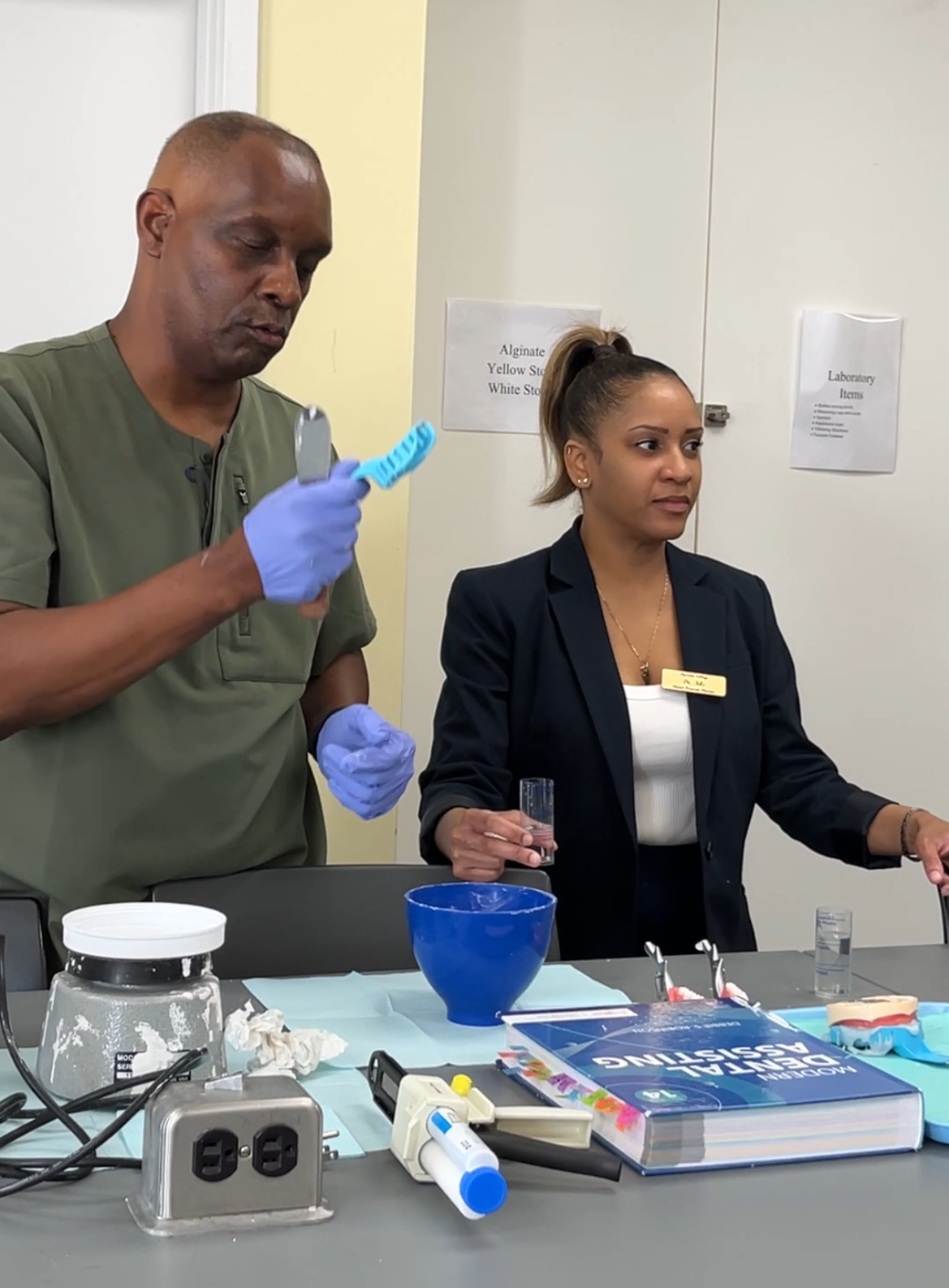
Why NYSMDA Is Becoming One of the Best Career Paths in New York City for Medical and Dental Assistant Training
As the cost of traditional college continues to rise across the United States, many New Yorkers are searching for faster, more affordable career paths that still offer stability, upward mobility, and long-term demand. For a growing number of students, the New York School for Medical and Dental Assistants has emerged as a practical gateway into one of the strongest sectors of the American economy: healthcare.
Located in New York City, NYSMDA focuses on career-oriented healthcare education designed to help students enter the workforce quickly. In a city where living expenses continue to climb and student debt has become a major national concern, many prospective students increasingly prioritize speed, employability, and return on investment over the traditional four-year college experience.
Healthcare continues to be one of the most durable employment sectors in the American economy. Hospitals, urgent care clinics, specialty practices, dental offices, outpatient surgical centers, and private physician groups all require trained support professionals to operate efficiently. Medical assistants and dental assistants sit at the center of that ecosystem.
Unlike many industries vulnerable to economic downturns, healthcare demand tends to remain resilient regardless of broader market conditions. New York’s aging population, expanding healthcare infrastructure, and continued population density create ongoing demand for trained allied health professionals. That trend has made healthcare support careers increasingly attractive to students seeking long-term job security.
One reason NYSMDA stands out is its focus on workforce preparation rather than purely academic theory. Students receive practical training intended to mirror real clinical environments. This hands-on approach matters because employers often prioritize candidates who can immediately contribute in patient-facing settings.
Medical assisting itself has evolved substantially over the last decade. Today’s medical assistants frequently handle a combination of clinical and administrative responsibilities. Depending on the workplace, they may assist with patient intake, electronic medical records, scheduling, insurance processing, vital signs, injections, laboratory preparation, and physician support tasks. Dental assistants similarly play critical operational roles inside modern dental practices, helping procedures run efficiently while supporting both dentists and patients.
For many students, one of the strongest appeals of NYSMDA is accessibility. The school attracts a broad cross-section of New Yorkers, including career changers, first-generation college students, working adults, immigrants, and students looking for alternatives to traditional universities. The programs are designed around employability and practical outcomes.
Its location in Queens also provides a major logistical advantage. New York is a city where commuting can significantly impact educational success. A centrally accessible campus near public transportation makes attendance easier for students across multiple boroughs.
Another major advantage is speed. Many NYSMDA students are not looking to spend four to six years in school before entering the workforce. They want direct pathways toward employment and financial independence. Career-focused healthcare programs can provide exactly that.
The healthcare industry also offers long-term mobility opportunities. Many students use medical assisting or dental assisting as an entry point into larger healthcare careers. Graduates may later pursue nursing, radiologic technology, dental hygiene, healthcare administration, laboratory sciences, or specialized certifications. In that sense, NYSMDA can serve as the beginning of a broader professional journey rather than a final destination.
The rise of technology in healthcare has also increased demand for workers comfortable with electronic medical systems, digital scheduling platforms, insurance software, and modern patient management systems. Smaller clinics and large healthcare organizations alike increasingly value staff members who can operate efficiently in technology-driven environments.
Another reason schools like NYSMDA are gaining attention is the changing perception of career education in America. Younger generations are increasingly questioning whether traditional college paths justify the cost. Many students now prioritize programs that provide direct career outcomes, lower debt exposure, and faster entry into stable industries.
In cities like New York, where economic pressure is constant, practical education has become more attractive than ever. A student who enters the workforce quickly in healthcare may gain years of earning power compared to peers pursuing longer educational pathways with uncertain job prospects.
At the same time, healthcare careers often provide intangible rewards beyond financial stability. Many students are drawn to the opportunity to work directly with patients, contribute to community health, and participate in professions centered around helping others.
For New Yorkers seeking a realistic, employment-focused path into a stable industry, NYSMDA increasingly represents a compelling option. Rather than emphasizing prestige branding or theoretical academia, the school’s value proposition centers on accessibility, practical training, workforce readiness, and the possibility of building a brighter financial future through healthcare.
The Rise of Dental Membership Plans: Why More Americans Are Ditching Traditional Dental Insurance
For decades, Americans were told that dental insurance was the smartest way to manage oral healthcare costs. But in 2026, a growing number of patients are beginning to question whether traditional dental insurance still delivers the value they expected.
Instead of relying entirely on insurance providers, many consumers are turning toward an alternative model that is rapidly gaining traction across the dental industry: membership plans.
The shift reflects growing frustration with rising premiums, annual maximums, confusing exclusions, denied procedures, and surprise out-of-pocket costs that continue catching patients off guard during even routine dental visits.
For many families, dental insurance no longer feels simple.
Patients often discover that while preventive cleanings may technically be covered, additional services such as X-rays, fluoride treatments, periodontal maintenance, crowns, or deep cleanings can still generate substantial bills.
The problem becomes even more frustrating when patients realize many plans cap annual benefits at relatively modest amounts. Once those yearly limits are reached, patients become responsible for the remainder of treatment costs themselves.
That has created an opening for membership-based dental programs that promise greater pricing transparency and simpler billing structures.
Unlike insurance, dental membership plans are usually offered directly through dental practices. Patients pay a monthly or annual fee in exchange for access to discounted services and preventive care benefits.
These plans often include:
routine cleanings
exams
X-rays
discounted restorative procedures
predictable pricing
no waiting periods
no deductibles
no annual claim denials
For uninsured Americans, freelancers, gig economy workers, retirees, and small business owners, the simplicity can feel refreshing compared with navigating traditional insurance paperwork.
According to industry observers, one reason membership plans are expanding quickly is because consumers increasingly value predictability over complexity.
Jordon Comstock, Founder and CEO of BoomCloud, says many patients are exhausted by not knowing what a dental visit will ultimately cost.
“Patients want transparency,” Comstock explains. “They want to know what they are paying before they sit in the chair. Membership plans help eliminate much of the confusion surrounding deductibles, denied claims, annual maximums, and hidden costs.”
The economic environment may also be accelerating the trend.
As inflation continues affecting household budgets, many Americans are carefully evaluating recurring monthly expenses. Some consumers are deciding that high-premium dental insurance plans with restrictive annual caps no longer make financial sense, especially if they rarely require major procedures.
Instead, they are opting for lower-cost membership models that emphasize preventive care and straightforward pricing.
Dental practices also benefit from the arrangement.
Membership plans create recurring revenue, strengthen patient loyalty, reduce administrative paperwork, and encourage patients to return consistently for preventive treatment rather than waiting until emergencies arise.
That preventive consistency matters enormously in dentistry.
Oral health problems often become dramatically more expensive when patients delay care. Small cavities can become root canals. Gingivitis can progress into severe periodontal disease. Preventive visits costing under one hundred dollars may eventually become multi-thousand-dollar restorative cases.
Many dentists believe membership plans help reduce that delay by making patients feel more financially comfortable returning regularly for cleanings and exams.
The rise of membership dentistry also reflects broader consumer trends happening throughout healthcare.
Patients increasingly expect:
upfront pricing
subscription-style billing
transparent service packages
digital payment flexibility
fewer insurance complications
predictable monthly expenses
Healthcare itself is slowly beginning to resemble other subscription-driven industries where consumers prioritize simplicity and convenience.
Still, experts caution that membership plans are not perfect for everyone.
Patients who anticipate major oral surgery, extensive restorative work, orthodontics, or specialized treatment may still benefit significantly from traditional insurance depending on their policy structure.
The smartest approach often involves comparison rather than assumptions.
Consumers should carefully review:
annual insurance premiums
deductible requirements
annual maximums
waiting periods
provider network limitations
membership plan discounts
self-pay pricing
financing options
In some cases, traditional insurance remains the best option. In others, membership programs may offer greater value and transparency.
The key difference is that patients are beginning to behave more like healthcare consumers than passive insurance holders.
They are comparing prices. Asking questions. Shopping around. Requesting written estimates. Evaluating alternatives.
That behavior could permanently reshape how dental care is purchased in the United States over the next decade.
As Oral Health Month approaches, one thing is becoming increasingly clear: Americans no longer simply want dental coverage.
They want clarity.
Why More Americans Are Skipping the Dentist in 2026 Despite Having Dental Insurance
Why More Americans Are Skipping the Dentist in 2026 Despite Having Dental Insurance
Across the United States, millions of Americans carry dental insurance. Yet an increasing number are still postponing cleanings, avoiding checkups, and delaying treatment because they fear the bill waiting at the end of the appointment.
The trend is becoming one of the most overlooked healthcare affordability problems in America.
Dental insurance was originally designed to help patients maintain preventive care and avoid serious oral health problems. Instead, many consumers now describe dental coverage as confusing, unpredictable, and financially stressful.
Patients frequently walk into routine appointments believing their visit will be fully covered, only to discover additional charges for X-rays, fluoride treatments, periodontal work, or procedures that fall outside standard preventive care.
The result is growing anxiety around something as basic as a dental cleaning.
For many families already dealing with inflation, housing costs, food prices, and medical expenses, even a few hundred dollars in unexpected dental charges can disrupt a monthly budget.
Industry analysts say one of the core problems is that many Americans misunderstand how dental insurance actually works.
Unlike major medical insurance, dental plans often operate with strict annual maximums, waiting periods, exclusions, and coverage percentages that leave patients responsible for large portions of treatment costs. Some plans stop contributing entirely after annual spending reaches relatively low thresholds.
That creates a system where patients technically have insurance but still feel financially exposed.
According to pricing information published by BoomCloud, standard dental cleanings for insured patients may cost little or nothing out of pocket. However, costs can escalate quickly if a patient requires deep cleaning procedures, periodontal treatment, or restorative care.
A deep cleaning involving multiple quadrants of the mouth can cost hundreds or even thousands of dollars depending on insurance limitations and provider pricing.
This financial uncertainty has real public health consequences.
When patients delay preventive care, oral health issues often become more severe. Small cavities can progress into infections. Minor gum irritation can evolve into advanced periodontal disease. Teeth that might have been saved with early treatment may eventually require extraction or implants.
Researchers have increasingly linked oral health to broader medical conditions as well, including cardiovascular disease, diabetes complications, and systemic inflammation.
That means delayed dental care can create risks extending far beyond the mouth itself.
Jordon Comstock, Founder and CEO of BoomCloud, says patients are increasingly seeking transparency before they agree to treatment.
“People want predictable pricing,” Comstock explains. “They want to know exactly what is covered, what is not covered, and what happens financially if treatment changes during the visit. When patients feel uncertain about cost, many simply postpone care entirely.”
The issue may become even more important as employers continue shifting healthcare expenses toward workers through higher deductibles, co-pays, and premium contributions.
Dental coverage gaps also disproportionately affect lower-income households, gig workers, freelancers, and people without employer-sponsored benefits.
For uninsured Americans, the challenge becomes even larger.
Without coverage, many patients rely on emergency dental visits rather than preventive care. Unfortunately, emergency dentistry often represents the most expensive stage of treatment.
A filling ignored for too long may become a root canal. A cracked tooth can become an extraction. Gum disease can eventually require surgery or implants.
In many cases, the most affordable dental visit is the one that happens early.
Consumer advocates increasingly argue that pricing transparency could help reduce fear surrounding dental visits. More practices are beginning to offer written estimates, membership programs, financing options, and transparent self-pay pricing structures designed to help patients better predict costs before treatment begins.
Membership plans in particular have gained traction among smaller practices and uninsured patients. These plans often involve monthly or annual fees in exchange for discounted preventive services and reduced treatment pricing.
Some patients also discover that cash-pay pricing can occasionally cost less than navigating insurance restrictions, depending on the procedure and provider.
Still, experts say patients must ask more questions before appointments than they traditionally have in the past.
Questions Patients Should Ask Before a Dental Appointment
Is the cleaning preventive or periodontal?
Many surprise charges begin when a routine cleaning transitions into deeper periodontal treatment.
Is the office in-network?
Out-of-network providers can dramatically increase patient responsibility.
What services are not included?
X-rays, fluoride treatments, exams, and follow-up visits may involve separate charges.
What is my annual maximum?
Patients should understand how much insurance will actually pay before coverage ends.
Are payment plans or membership options available?
Alternative pricing models may reduce costs for some households.
A Growing Healthcare Transparency Problem
The dental affordability debate reflects a much larger national issue around healthcare pricing transparency.
Patients increasingly expect upfront estimates, predictable billing, and clearer communication regarding what insurance truly covers. Dentistry has become one of the clearest examples of how difficult healthcare pricing can still be for average consumers to navigate.
As Oral Health Month approaches, dentists, insurers, employers, and policymakers may face growing pressure to simplify coverage and improve transparency for patients already struggling with economic uncertainty.
For millions of Americans, the issue is no longer simply about oral health.
It is about financial trust.
Why Dental Insurance Still Leaves Millions of Americans Paying Out of Pocket for “Covered” Cleanings
Why Dental Insurance Still Leaves Millions of Americans Paying Out of Pocket for “Covered” Cleanings
As National Smile Month shines a spotlight on oral health awareness and Oral Health Month approaches in June, many Americans are discovering an uncomfortable financial reality inside the dentist’s office. Even patients with dental insurance are often surprised by how much they still owe for what they believed would be routine preventive care.
For decades, dental insurance marketing has emphasized “free cleanings” and low-cost preventive visits. Yet across the United States, patients continue receiving unexpected bills after standard appointments. The problem is creating growing frustration at a time when healthcare affordability remains one of the biggest financial concerns facing American households.
The confusion usually begins with a misunderstanding about what dental insurance actually covers.
A routine cleaning may indeed be fully covered under some plans. However, the moment a dentist identifies gum disease, periodontal issues, additional X-rays, fluoride treatment, or the need for a deeper cleaning procedure, the cost structure can change dramatically. What begins as a preventive visit can quickly become a significant out-of-pocket expense.
According to patient pricing data from BoomCloud, insured patients often pay between $0 and $100 for standard cleanings, while deep cleanings can cost between $150 and $300 per quadrant even with insurance coverage. For uninsured patients, the numbers can become far more severe. Standard cleanings may range from $75 to $400, while advanced periodontal treatments can exceed $1,000.
These costs are becoming increasingly important as economic pressure continues squeezing middle-class families.
Research from the KFF found that roughly four in ten adults carried medical or dental debt in recent years, including balances owed to banks, credit cards, collection agencies, relatives, and friends. Meanwhile, researchers at Johns Hopkins University found that people carrying medical debt were significantly more likely to delay dental care altogether.
That delay can become extremely costly over time.
Unlike some healthcare issues that stabilize on their own, dental problems frequently worsen when ignored. Small cavities can evolve into root canals. Mild gum irritation can become periodontal disease. Preventive visits that might have cost under one hundred dollars can eventually turn into multi-thousand-dollar restorative procedures.
Jordon Comstock, Founder and CEO of BoomCloud, believes one of the biggest problems is uncertainty.
“Patients become anxious when they do not know what the final bill will look like before treatment starts,” Comstock explains. “A cleaning may be fully covered initially, but if the patient suddenly needs periodontal maintenance, deeper scaling, or additional imaging, the financial picture changes immediately. That uncertainty alone causes many people to postpone care.”
Dental insurance itself also contains structural limitations many consumers fail to notice until treatment begins.
Unlike traditional medical insurance, dental plans often include annual maximums. Many plans stop paying entirely after patients exceed yearly limits that commonly range between $1,000 and $2,000. Once that cap is reached, patients become responsible for the remaining balance.
Consumer advocacy group Families USA has highlighted how quickly these annual maximums can be exhausted, especially when patients require crowns, root canals, oral surgery, or periodontal care. The organization also noted that out-of-pocket dental spending can average hundreds of dollars annually even among insured patients.
For many Americans, this creates a growing sense that dental insurance does not function like true insurance at all.
Instead, some experts argue it behaves more like a limited discount program with annual spending caps and complicated coverage restrictions.
This has helped fuel interest in alternative payment models such as dental membership plans, transparent self-pay pricing, and cash-discount programs offered directly through dental practices.
Comstock says patients should compare all available payment structures before automatically assuming insurance offers the best value.
“The biggest mistake consumers make is assuming insurance is always the cheapest option,” he says. “Sometimes insurance helps tremendously. Other times, membership plans or transparent cash pricing are easier to understand and may actually cost less overall. Patients need to compare every option carefully.”
As inflation continues affecting household budgets in 2026, more families are beginning to treat dental care like any other major financial decision. They are asking for estimates ahead of appointments, comparing providers, researching membership plans, and questioning what is truly included in preventive visits.
Financial transparency inside dentistry may become increasingly important as patients demand greater clarity around healthcare pricing nationwide.
Why Preventive Dental Care Still Matters
Despite the financial frustration surrounding dental coverage, experts continue stressing that preventive care remains far less expensive than delayed treatment.
Skipping cleanings and exams because of cost uncertainty may save money temporarily, but untreated oral health issues can escalate rapidly. Infections, gum disease, tooth loss, and emergency dental procedures often create significantly larger financial burdens later.
Dentists consistently emphasize that early intervention remains one of the most effective ways to reduce both long-term costs and serious oral health complications.
Five Ways Patients Can Avoid Surprise Dental Bills
1. Confirm Whether the Cleaning Is Routine or Deep Cleaning
Many patients do not realize these procedures are billed differently. Deep cleanings usually involve periodontal treatment and substantially higher costs.
2. Verify Whether the Dentist Is In-Network
Insurance reimbursement rates often depend heavily on network participation. Out-of-network visits may produce dramatically higher patient bills.
3. Request a Written Cost Estimate Before Treatment
Patients should ask for a detailed breakdown covering exams, X-rays, fluoride treatments, periodontal work, and possible follow-up procedures.
4. Compare Insurance With Membership Plans
For some patients, in-house dental membership plans or transparent cash-pay pricing may offer more predictable costs than traditional insurance.
5. Do Not Delay Preventive Care
Avoiding dental appointments due to uncertainty may ultimately create larger health and financial problems later.
The Bigger Picture
As National Smile Month and Oral Health Month encourage Americans to focus on oral wellness, another issue is quietly emerging alongside the healthcare conversation: affordability transparency.
Millions of Americans continue entering dental offices believing they fully understand their insurance coverage, only to discover unexpected expenses after treatment begins.
That disconnect between expectation and reality may become one of the most important consumer healthcare issues facing dentistry over the next decade.